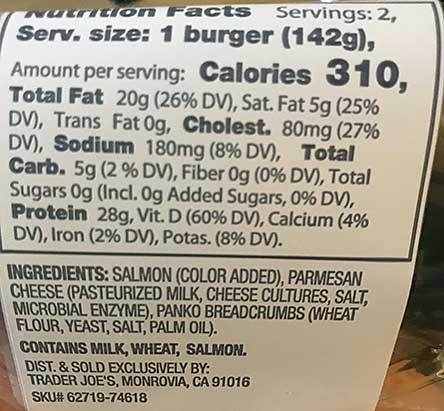
“Made with Norwegian farm raised salmon” Bake, pan fry or broil. Ingredients – Salmon, parmesan cheese, panko breadcrumbs.
Trader Joe’s uncooked SALMON BURGERS are in the fresh fish refrigerated section. They come packaged on a tray with vacuum wrapped plastic tightly covering the two burgers. Made from ground salmon, these burger are quite soft. So soft that removing them from the package was tricky without breaking them. I ended up carefully cutting around the plastic wrap with a sharp knife. They kind of wanted to fall apart on me just trying to get them out, so I ended up sliding a spatula under each one to lift it out intact. So be careful, lest they fall apart. Frankly if this was my recipe I would have put egg in the mixture with a bit more binder so they would stay together better (bread crumbs / panko….hmm, that may not be a bad idea, I may do exactly that next time and re-shape them.) I am guessing TJ’s wants you to know they are mostly all salmon with little binder, however in this type of burger made from ground fish, the binder in reality help keep things together.
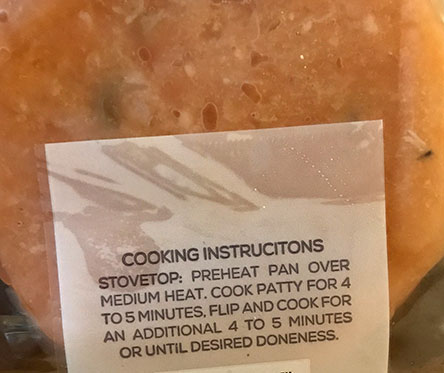
“Cook 4-5 minutes, flip and cook another 4 minutes or to desired done-ness.”
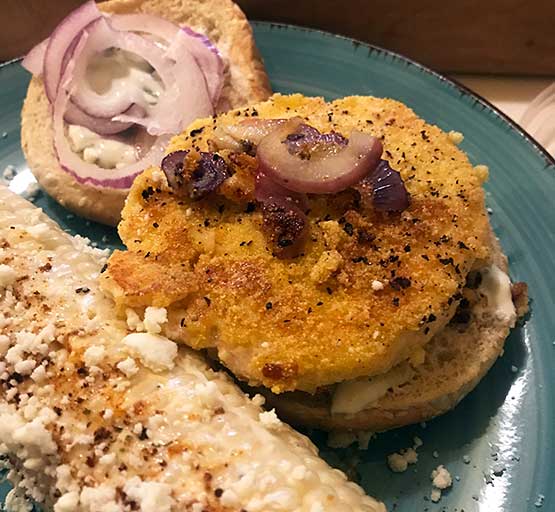
I cooked these pan fried in a tablespoon of butter, first dusting them with some more panko breadcrumbs. I found these a bit under seasoned so I would give them a hit of salt and pepper. I could not taste Parmesan cheese though it’s listed as an ingredient, probably as a binder.
We ate these salmon burger patties on a toasted hamburger bun. They were good. I put some Tzaziki sauce on them but realized what I should have actually used: TJ’s Tartar Sauce – Of course that would match with these! I will get some next time. These were good on a bun but they might be equally good without the bread just served on their own with some sauce and some sides (rice, potatoes, veggies…). They really do need a bit of some sauce to liven them up, and TJ’s tartar sauce should match perfectly with these.
Two salmon patties are $6.29, or about 3 each. I would buy these again. SHOPPING suggestions: Salmon burgers, buns, tartar sauce, lemons, soft greens for garnish. Maybe your fish-hating kids will eat it if you disguise it as a burger!?
UPDATE (FALL/WINTER ’21) I have not been able to find these for some time so I am afraid they are discontinued. Anyone seen them ? Can you still buy them?TJ’s does sell frozen salmon burgers.…
I picked up a package of Trader Joe’s “Wild Soy Ginger Marinated Cod Fillets” in the Frozen section at TJ’s to try. I was quite satisfied, this dish turned out to be really good. This marinated cod costs about $7/lb. – very much on the lower price end for almost any fish these days, and this is wild caught cod from the Atlantic, so another good find at TJs.
This cod is tasty, and easy-peasy to make. I followed instructions on the package about defrosting them overnight in the fridge. An overnight thaw in the fridge is always the best method for defrosting as thawing slowly is best to preserve the original quality. So just remember you need to think about this the day/night before if at all possible. If after an overnight thaw, you find its not completely defrosted when you are ready to cook you can put it in the sink in a pot and run a stream of cold water over the unopened package for 5-15 minutes till it feels completely defrosted. I didn’t try the method on the package where they say you can defrost in a bowl of warm water, in fact I would completely say never use warm water, its too fast and damages cell structure. If you really need to do a “quick defrost” again run a stream of cold water on it till defrosted (again, “emergency only” method). A fish monger told me to do it with cold running water.
On the package they suggest 3 methods to cook the cod – in a skillet, bake it or microwave it. Me, I decided I would cook the miso cod by broiling the fish and glazing them with the marinade. Broiling is a typical Japanese method of cooking. I took the fillets out of the package with tongs careful to reserve all the marinade for later use. I placed the drained defrosted fillets in a black cast iron pan (my favorite cooking utensil), dotted them with a little butter and put the pan under a very hot (pre-heated) broiler. The fillets were not thick. One was a little bit thicker. So I cooked the fillets for about 3 minutes then took the pan out of the oven so I could pour over that reserved marinade over the fillets. Aha! The reserved marinade will make you a very nice soy miso glaze. So I immediately put the pan back under the broiler to finish for about just another minute or two, keeping a close eye on the fish and the glaze which was all bubbly and browning up. As you can see the glaze browns up beautifully, thickens, to make a nice sauce for the fish, and obviously keeps the fish moist and not dried out. You can even put another little bit of butter in the pan and hit the fish with freshly ground pepper, and a squeeze of fresh lemon. I forgot to mention I threw in some frozen shelled Edame (soy beans) around the fish to cook with it. The edamame were a perfect match with the fish, along with some some rice. There’s a Japanese meal for you.
We really enjoyed this. Sometimes cod fish can be a bit boring but this miso / soy marinade treatment makes this product very good. You can hit it if you like with even more freshly grated ginger (I generally do).
To sum up I found TJ’s Soy Ginger Marinated Wild Cod Fillets to be super convenient, easy to make, and really tasty. I would buy it again, and in fact have a few times since I first tried this. This is becoming a Go-To item for me at TJ now and I usually have a package in our freezer.
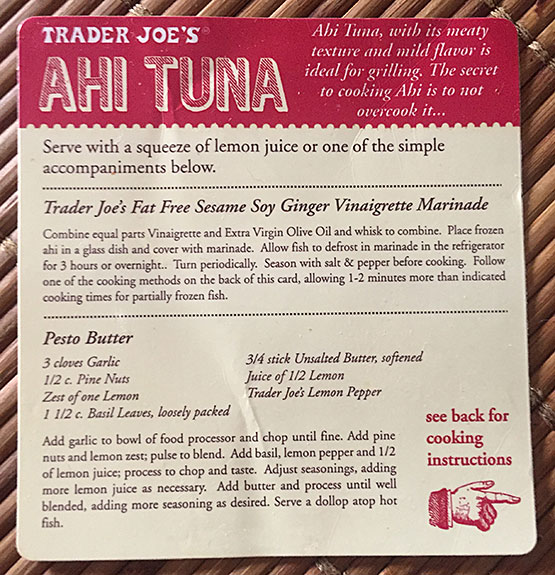
“The secret to cooking Ahi Tuna is not to overcook it”
What is Ahi Tuna? “Ahi” is Hawaiian for YELLOWFIN TUNA
“Yellowfin tuna, scientifically known as Thunnus albacares, is a popular species of tuna found in tropical and subtropical waters worldwide. They are often marketed as “ahi” in Hawaii and elsewhere.”
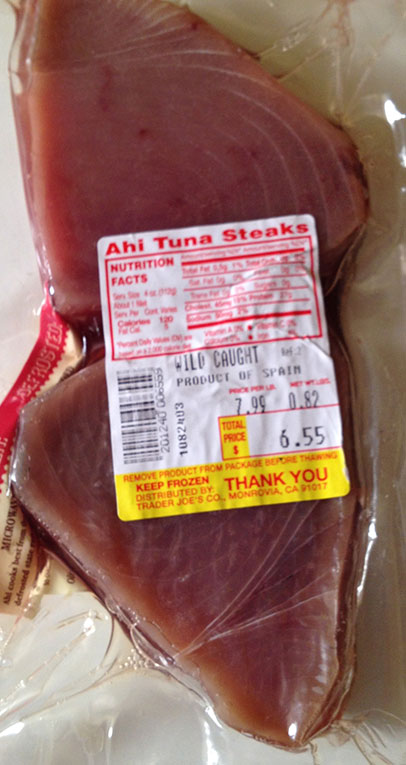
Trader Joe’s sells AHI TUNA STEAKS, in the section with their other frozen fish.
My package was labled “Wild Caught, Product of Spain” (fished from Spanish waters in the Atlantic)
Ahi Tuna is one of my favorite fishes that TJ’s carries. and I highly recommend trying it if you never have before. It’s so good, meaty and satisfying.
If you have any leftovers, its delicious served cold the next day, maybe over a bed of rice or a salad.
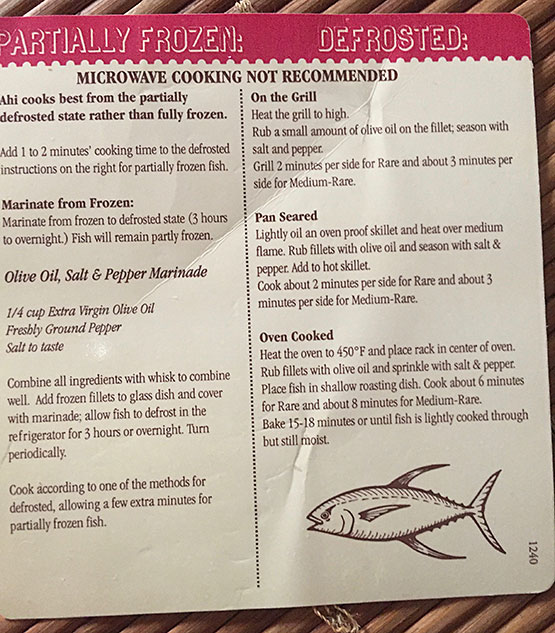
How To Cook Ahi Tuna: First off, defrosting the fish. The best way will be a slow “overnight” defrost in the fridge. While the slow defrost will give the best result, if you didnt plan ahead, you could you can try putting the package of fish in a bowl in the sink, then running a slow stream of cold water over it. Leave it like that. That will take perhaps an hour to defrost that way.
TIP: Do Not Nuke the fish to defrost it; it will ruin the texture of the fish, making in mushy.
The package states you should “remove from package before defrosting”. I’m not quite sure why… anyone have a clue? Anyway I defrost it in the fridge overnight in the package and it seems fine.
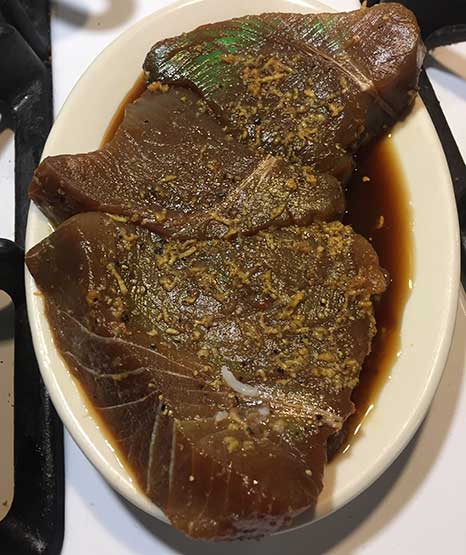
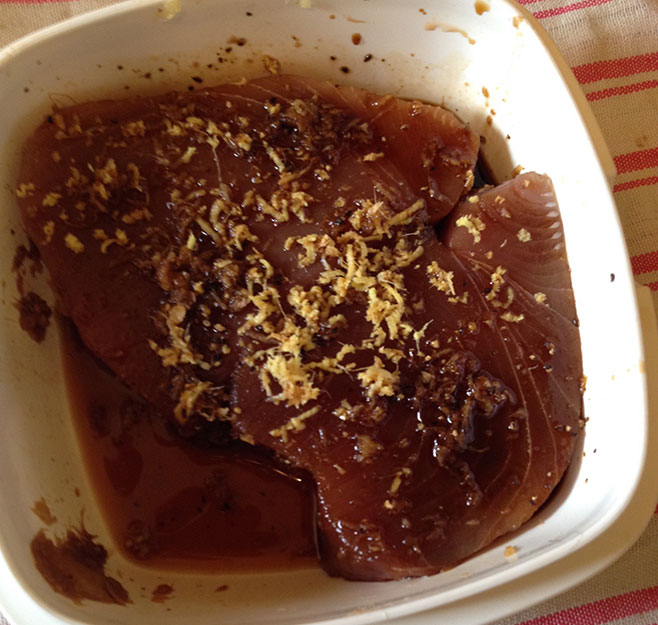
MARINADE: Once the fish is defrosted I marinate it for a half hour to an hour before cooking. As far as marinades go, I generally make a typical Asian/Japanese style marinade: Soy sauce, fresh grated ginger, fresh ground black pepper, a pinch of honey or brown sugar, plus some oil, either olive oil or better still a teaspoon of TJ’s dark roasted sesame oil. You can add some type of acid if you like: a tiny amount of cider vinegar, lemon juice, or sake if you have it. You should serve it with some fresh Lemon or Lime.
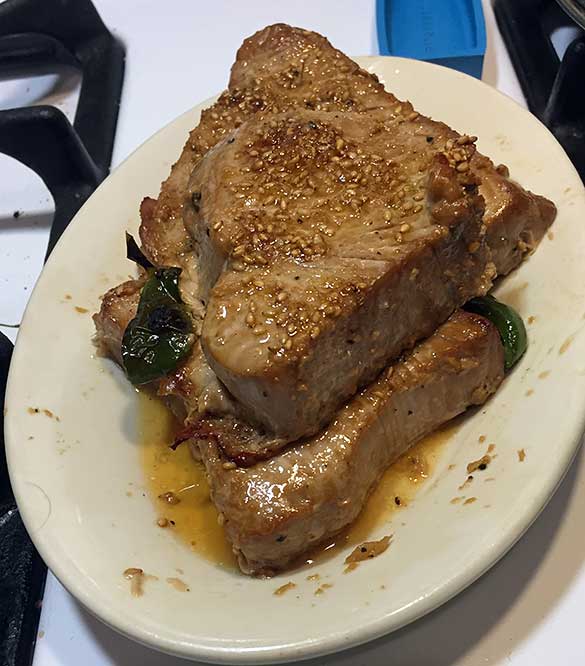
Cooking Ahi Tuna: The first rule of AHI tuna is don’t overcook it. Its very easily overcooked. It is crucial that you don’t overcook ahi tuna as it can dry out easily. So be careful with your cooking time. Personally I think AHI is best cooked in the Japanese “Tataki-style” way which is just searing the outside on all sides and leaving the center a bit pink (See pic above).
I generally cook it in a black cast iron pan over med-high heat with a little oil, and/or butter, searing the outside for 60-90 seconds on one side then turning with tongs to cook the other sides for a minute. You can use the tongs on the sides but again be careful not to overcook your fish. After you do it once or twice you will get the hang of cooking this way.
When done, take the fish out of the pan, and let it rest on a plate for a few minutes before you slice it. Which you will do against the grain like a steak. Be sure to save the pan juices and any juice that runs out on the cutting board to pour over your fish.
You can deglaze the pan with sake, rice vinegar, or even a splash of water, or some extra marinade that you saved at the beginning. I found that if you marinated the fish and use that marinade to deglaze the pan there is protein that coagulates when you cook it, so it glops up a little (I just thin it with soy and some water, it doesn’t bother me too much, it makes it thicker thats all). If that gloppy stuff bothers you, don’t use the marinade, make a fresh sauce to serve with the fish. Here’s some ideas for sauces….
“Butter Shoyu” (Soy Butter Sauce) Put a fat dollop of butter in the pan along with a little soy sauce, a terrific combination. Mix it well and and pour over the Ahi. Serve with slices of fresh lemon or lime.
PONZU: Another classic Japanese sauce. Combine Soy sauce and fresh Lemon Juice. Do not cook this, just mix together. A bit of grated lemon rind would be a gourmet touch.
As in the photo of my finished Ahi, it should end up seared on the outside and pink in the center, just how pink is up to you. I like mine like it is in the thickest part, the center (just this side of raw) while my wife likes it as it is cooked on the ends (medium) which I think of as overcooked. As a final touch, I sprinkled some sesame seeds on top, sliced it against the grain, and put it on a bed of arugula, pouring the pan juices over the top. Ahi Tuna is really delicious and I am sure your family will also love this very steak-y fish.
You could even try it as “Poke” I guess (ceviche style). I am willing to eat it this way but my (Japanese) wife won’t let me make this as poke as she says this is not “sashimi grade tuna” (true) which costs three times as much, selling for about $25/lb instead of this at $8/lb. So at 8 bucks a pound this is a another good deal from Mr. Trader Joe.
ASIAN MARINADE: 2 tbs soy sauce; 1″ peeled fresh ginger, grated; fresh ground black pepper, a little honey or brown sugar, teaspoon of sesame oil (or olive oil) plus lemon or lime juice for a marinade (you can make a bit more and save some to serve on the side). Marinate in the fridge (on fully defrosted fish) for 30-60 minutes turning it once. Cook as desired.






 Trader Joe’s Rants & Raves (mostly raves, a few rants)
Recent Comments