Trader Joe’s fortunately sells a number of excellent Japanese style rice crackers (aka “senbei”) and I am a big fan of any kind.
These types of rice crackers are baked not fried. Hence low fat, low cal. As made just from rice flour these are naturally GLUTEN FREE.
They’re great for snacking by themselves as well as being great as a cracker for any topping. We like all of the different kinds of rice crackers they carry. I buy one or another of them all the time.
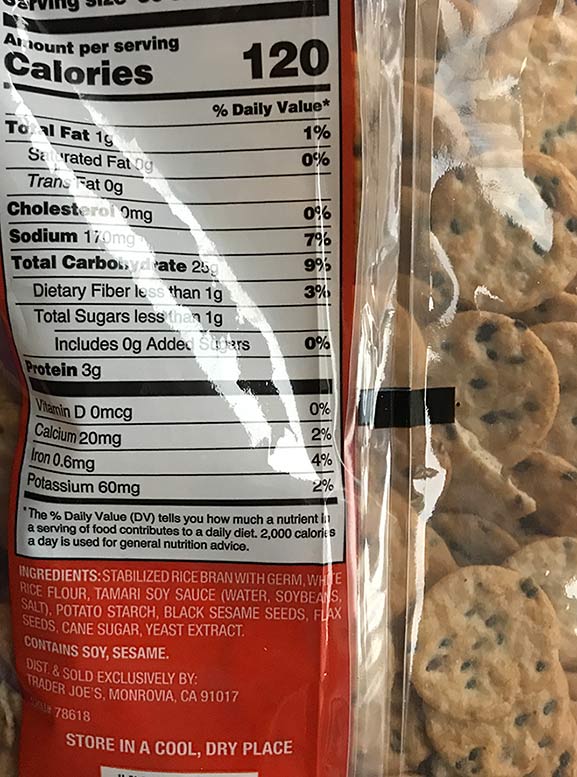
These Savory Thin Mini rice crackers are the soy sauce / tamari version of an identical rice cracker minus the tamari flavor, which is lighter in color. Also called “Savory Thin Mini Rice Crackers”, either version of these mini rice crackers are good.
The one with Tamari soy sauce flavor I find quite tasty as it gets some UMAMI from the Tamari and it’s Multi Seed and also contains black sesame seeds and flax seeds.
All of the Trader Joe’s rice crackers are naturally GLUTEN FREE as they are made from rice flour. The ingredient list has just a few ingredients, no weird chemical names, and overall seems pretty natural. These Mini Rice Crackers are really tasty and worth trying if you’ve never gotten them before.
$3.99 for 8 oz bag.
I would buy them again.
The lighter colored savory rice version of these rice crackers costs a bit less ($3.49) and those are also good if just a little plainer.
Sorry I cut off serving size; its 36 crackers = 120 calories; very low!
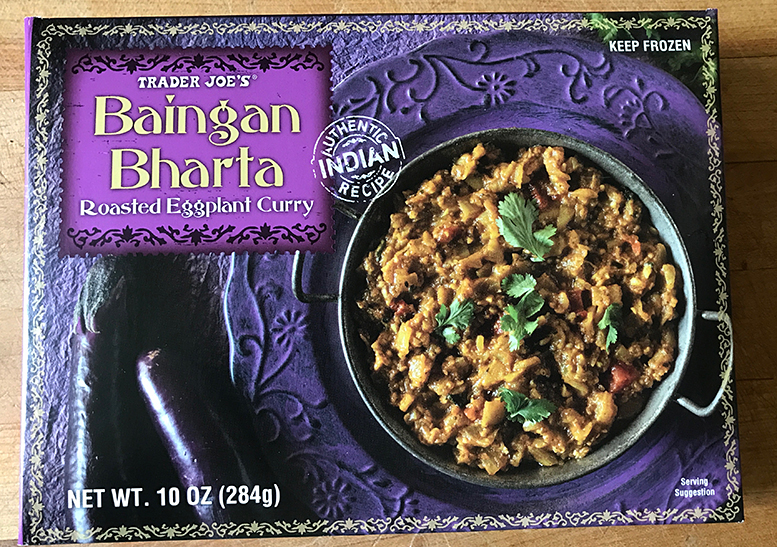
BAINGAN BHARTA – Roasted Eggplant Curry – Northern Indian dish from the Punjab region.
NEW ITEM: Trader Joe’s recently added one more very good “Authentic Indian Recipe” entrée to the frozen Indian dishes they carry.
Baingan Bharta is a spiced roasted eggplant dish. Baingan mean eggplant. Bharta means charred grilled vegetables. I’ve had this many times in Indian restaurants. If I see it on the menu, I will order it.
Trader Joe’s frozen version of Baingan Bharta is quite good, almost like something you could get at a restaurant though maybe not quite as smokey. This does have a bit of the classic smokey taste this dish is well known for, and it is very nicely seasoned with lots of authentic spices and flavor.
This Indian entrée joins two other very good frozen entrée vegetarian dishes that Trader Joe’s carries which I’ve reviewed and buy regularly: (1) the excellent PALAK PANEER and (2) a very good CHANNA MASALA. I love having any of these in my freezer., for whenever the mood strikes for an easy and very tasty Indian meal.
Just FYI, the ones I mention are the ones that are “entrées” meaning just that dish – they don’t include basmati rice (as some dishes do). I prefer to make my own Basmati rice . Plus I like that that Trader Joe’s put this dish in an Eco Friendly (reclyable) paper base instead of plastic as some other dishes use.
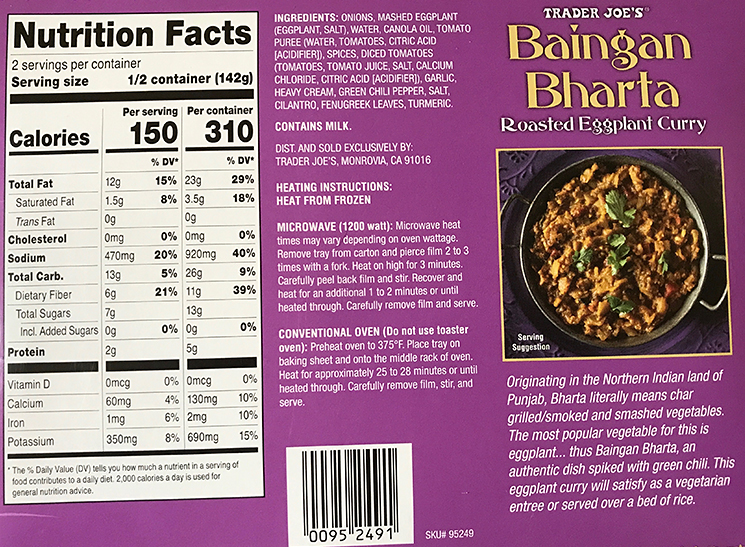
HEATING: Use Microwave, Oven or Stovetop (even though they don’t say that). I made it on the stove and it worked fine just heating in a pan. You can leave it out on the counter for maybe a 1/2 hr, to defrost slightly then put the frozen puck in a non-stick pan, cover it and heat it on low heat till its defrosted and heated thru, stirring every five minutes. It may take 15 minutes in total.
This dish goes well of course with Basmati rice and some Naan or similar bread to scoop it up. I made a quick Raita with Greek yogurt and cucumbers on the side. Or buy the Tzaziki at TJ’s.
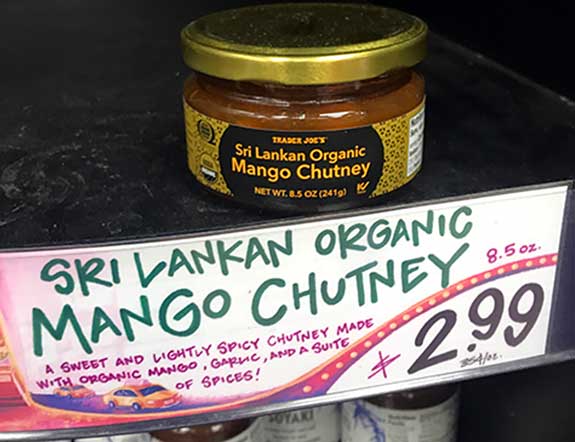
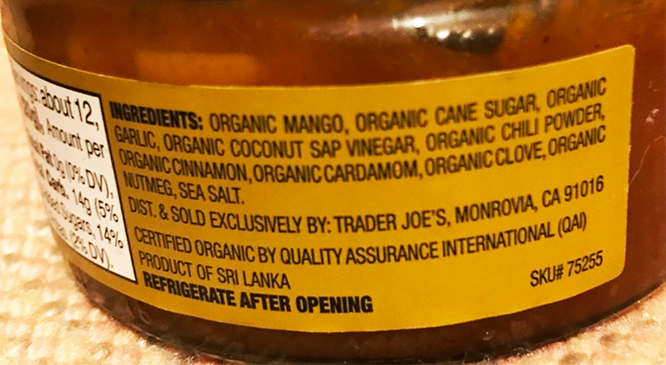
Naturally a nice chutney will go well too with this dish. One can not go wrong with TJ’s excellent Sri Lankan ORGANIC MANGO CHUTNEY
Cook up this entree up with Palak Paneer or a package of Channa Masala and some rice or naan and you have an Indian feast that will easily serve two for about $7-8.
$3.49 for 10 oz. I would buy this again.
Spice level – to me not very. Your mileage of course will vary. If you do find it too spicy, you can tone it down with a little plain yogurt.
“Our latest foray into the world of frozen entrées inspired by Indian cuisine combines the mild, slightly sweet flavor and creamy consistency of roasted eggplant with aromatic alliums like onion and garlic, savory seasonings like turmeric and fenugreek leaves, and a nice level of heat, courtesy of fresh green chili peppers. Hearty, flavorful, and satisfying, each bite of Trader Joe’s Baingan Bharta is layered with a pleasantly complex mix of tastes and textures. And though the eating experience may be complex, our take on this iconic Punjabi vegetarian dish (also known in some parts of the world as baigan chokha) is surprisingly simple to prepare: just heat, serve, and enjoy”
You can learn about this dish here which includes a recipe if you are feeling ambitious!
It’s wonderfully flavorful with just the perfect blend of sweet and spicy. Naturally it will go great with your Indian dinners such as your PALAK PANEER , or your Butter Chicken and Rice and some Naan and yogurt raita or tzatziki. However it will match well with many other types of food. Its great served on the side with grilled chicken or fish – or tofu for that matter. I even love it on top of cottage cheese! Great on a grilled cheese sandwich.
A jar is $3. I would buy this again. TIP: save yourself a trip and buy two jars!
“Made for us by a supplier in Sri Lanka, this magnificently Mango-forward Chutney is made with a thick, yet smooth and spreadable base of organic cane sugar and organic coconut sap vinegar, to which our supplier adds big, toothsome chunks of organic mango. They then flavor each batch with a suite of awesomely aromatic (and organic!) spices and seasonings that includes cinnamon, cardamom, chili powder, and garlic. Expertly balanced between its savory, sweet, and heat-based elements, the sky’s the limit with this vibrantly versatile Chutney. Try spooning a bit over pizza or pork chops, onto a freshly baked Organic Biscuit or toasted Tandoori Naan, or into a grilled cheese sandwich.“
Usually starting in Fall, Trader Joe’s will have a few kinds of squash. Acorn, Butternut….and I really like those. However some squash are a bit of work to prep, especially if you have to get the skin off. Generally I think, “too much work”. Which brings me to a favorite kind of squash, because its The. Easiest. Squash: Delicata! I’m so fond of it, if I see these at Trader Joe’s I will usually grab one and toss it in my basket.
A few years ago, TJ’s sold them for 99 cents each. They now cost $1.49. That is still pretty cheap, especially if you can score a big one.
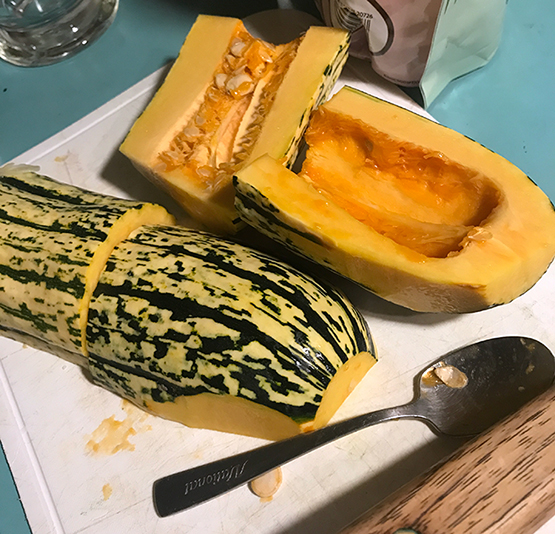
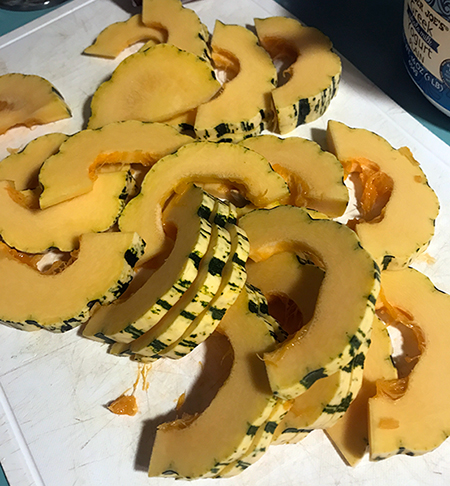
So what I really love about the DELICATA sqush is you don’t have to peel them. Which makes them so much easier. Delicata which means “delicate” of course. They have thin (edible) skin. Compared to acorn or butternut squash, which can take 10-15 minutes of serious knife work, these are so much easier. They take 1-2 minutes to prep. For me, that’s a squash game changer.
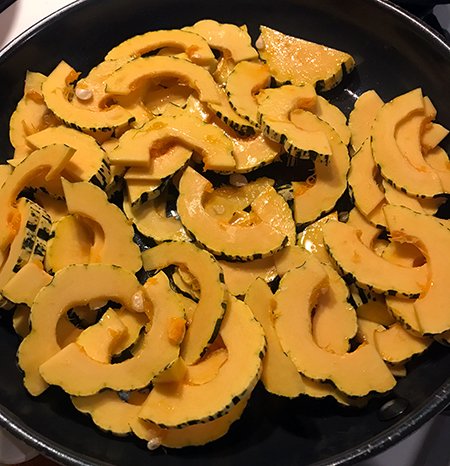
I made delicata recently and took a few pictures to show how easy it is to make them. Sure you can roast them. They are great that way. But you don’t have to. Mostly I just toss them into a pan with olive oil and garlic. Which is a little easier than roasting in my opinion and almost as good.
The ones here I made them as the ingredient for a pasta dish. I just added the pasta right in the same pan to finish the dish with bit of alfredo sauce (but even just butter and grated cheese would be fine).
Here’s my prep – Rinsed them. Took a teaspoon and scraped out seeds. Sliced them up, a bit thin (1/4″ or so thick) as I was going to sauté them. If I was going to roast them in the oven I would have cut them a bit thicker.
In this case I just tossed them into a non stick pan with 2 tablespoons of olive oil and crushed garlic. Salt and pepper. Sauté them for maybe 15-20 minutes on medium stirring frequently so they don’t burn. Let them get nice and brown almost as if you had roasted them. This is easier for me as I don’t even have to turn on the oven.
They make a great side dish, or use the cooked squash as an ingredient, for example in a pasta dish. Add them to cooked penne or farfalle, either with just butter and cheese or something a little creamy like alfredo or cacio e pepe.
If you never tried them before, I hope this give you the idea to try Delicata Squash and then you may grow to love them as much as I do; here’s some links to cooking ideas using delicata squash…..
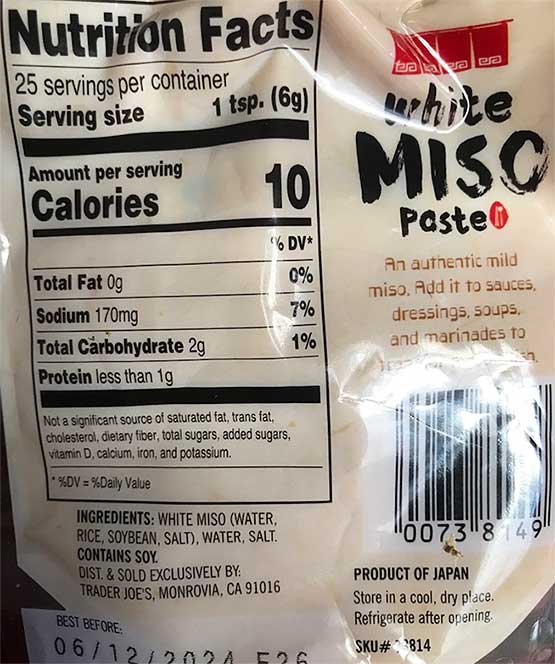
“With a lighter sweeter flavor than other miso pastes, this tasty miso offers nutty, sweet umami to any dish” – TJ
This is very nice white miso paste which is not quite as thick or strong or salty as many Japanese miso’s pastes in tubs are. This one is lighter and not as thick so its a bit easier to use just as is out of the package.
The squeezable pouch make is very easy to squeeze out as little or as much as you need.
This light white miso adds really delicious flavor.
This is a light white miso and I really like this to cook fish or chicken or what have you, usually spread this on and then broil it so it gets a little bit of a char. I used it recently to make some broiled salmon and another time with some mahi mahi and it worked great with both of these fishes. But you could use it on chicken of course as well.
MISO COATED SALMON (or any fish) Coat the fish with a layer of this white miso, then let it marinate it for about 30 minutes or more. Broil (or bake) the fish as usual but keep a close eye on it as the miso will brown and you want it a little browned but not burnt of course. When your dish looks golden brown, remove and let it sit for a few minutes before serving.
Optional: Mix up a bit more of the miso with a little honey and lemon juice to make a light glaze. During the last minute or so of cooking, take out the fish or chicken or tofu your are baking or broiling under the grill. Spread on the miso paste glaze, put it back in and let it cook for 30-60 seconds until the glaze looks perfectly browned. Option: You can also serve some of this miso glaze mix as a sauce alongside your protein.
In addition to fish I find the miso marinade works just as well using chicken and broiling it. It can also be used in soups, as well as in salad dressings, add to ramen or noodles, etc. A little miso added to some butter is great with veggies and other things. I bet it works well even with TOFU.
TJ’s White Miso comes in a handy squeeze pouch. I find this very convenient and easy to work with, to be able to squeeze out some quickly, and its much more convenient compared to the 1 lb tubs of miso I usually buy from a Japanese market. Frankly I usually find one of those tubs somewhere at the back of my fridge a long time after I bought it and maybe it expired six months back (but honestly Japanese miso is so salty it doesn’t really go bad, it can last a year easily)
Trader Joe’s Miso Paste is $2.99 (5.3 oz)
I would buy this again.
“Trader Joe’s White Miso Paste is made of fermented rice and soybeans, and like many fantastic, fermented foods, it has a complex flavor—a mix of savory, salty, and umami. Our supplier is a 5th generation miso maker in Japan. Their process involves a shorter-than-standard fermentation period to yield a delicate, umami flavor, making this a very versatile Miso. Most commonly used in savory preparations, White Miso adds depth to soups, sauces, and dressings. You can use it in marinades for meats, fish, and tofu, or as a dip”
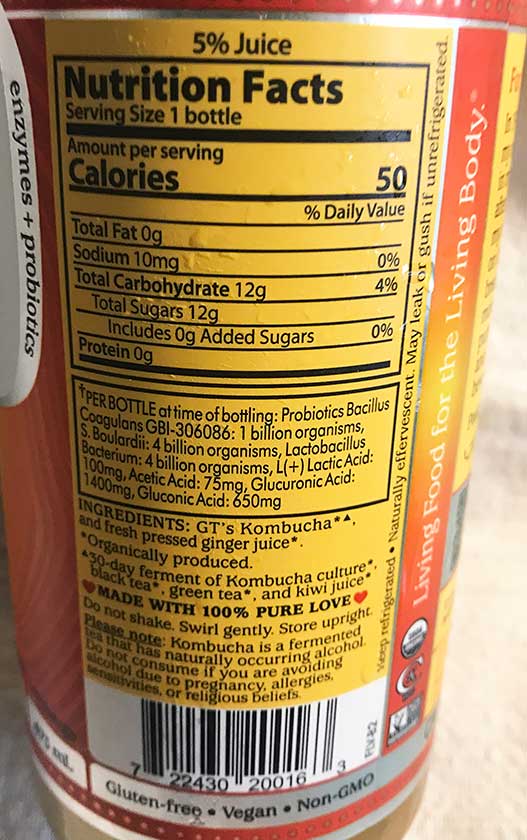
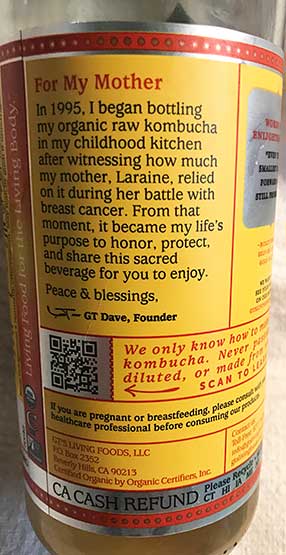
One of the few products Trader Joe’s sells under the original brand, SYNERGY RAW KOMBUCHA is an all natural fermented drink. My wife mostly buys it and most of the times she goes to Trader Joe’s she will get this. On occasion she will even let me have a few sips if I ask politely.
They have about three different flavors but of all of them this is her favorite. “Gingerade”, which is quite gingery. I like this flavor too.
But first if you are not familiar with it what is kombucha anyway ?
Kombucha has gotten more and more popular over the last few years from the health community as it’s loaded with probiotics.
Its very unique from a taste standpoint. The first time you open this bottle you will get a huge fizz. Like opening a soda. Really fermented with a LOT of natural fizz. Taste it and you get a bit of a natural bite on your tongue. Really zingy. Personally I like the taste and sensation and find it both refreshing and tasty, but it may be an acquired taste. The fizz will die down once you open it after a day.
Kombucha is a naturally fermented drink with lots of enzymes and probiotics. Kombucha is said to have many health benefits. People have made it for a thousand years or so. A little goes seems to go a long way. This 16 oz bottle lasts us a few days. This is made from black tea, green tea, kiwi juice and ginger.
Trader Joe’s sells Synergy Raw Kombucha for $3.49 (16 oz) It’s carried in the refrigerated drinks area.
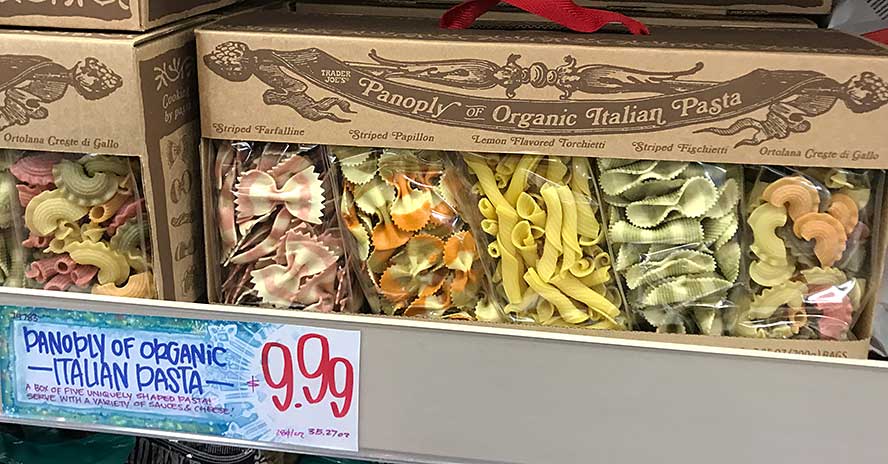
Seen at Trader Joe’s this “PANOPLY OF ORGANIC ITALIAN PASTA – A box of five uniquely shaped pastas. Serve with a variety of sauces and cheese. ”
its really nice looking. High Quality Artisanal Pasta. All natural, plant based colors. “Striped Farfalline, Striped Papillon, Lemon Flavored Torchietti, Striped Figchietti, Ortolana de Gallo”
Some of these shapes are quite rare to see in the U.S.
$9.99 for the 35 oz box. This box looks very gift-able to me….
UPDATE 2 (1/10/24) After the shortage, I finally saw lots of bottles of olive oil (100% Italian Presidents Reserve) on the shelf back in stock at Trader Joe’s (NYC/Amsterdam 93 St) However I did get a bit of sticker shock when I saw how much it went up. Its was $12 (up from about $8 the last time I got it?). The cheaper one was now just $1 less.
Note: (1/24/24) They seem to have lowered the price down a little from $12 to $11 for the Premium Extra Virgin 32 oz bottle with the spigot (1/25/24).
(12/31/23) What’s going on with olive oil at Trader Joe’s?! Have you had trouble recently finding olive oil on the shelves at Trader Joe’s? Yesterday at my Trader Joe’s (72 St NYC) I saw bare shelves where the Italian President’s Reserve EVOO would be with signs saying “Coming Back”. Yikes! What’s up with this? Well Trader Joe’s and others are experiencing shortages from suppliers in Europe. Unfortunately some countries especially Spain and Italy, have experienced two years with really bad weather, including brutally hot summers, drought (then floods) wildfires, the gamut…. and we’re seeing the results now with shortages of olives and olive oil.
The only bottles of EVOO I saw yesterday on the shelf at Trader Joe’s was the California EVOO. I bought one to tide me over for awhile. Its the same price ($7.49) yet half the size of the larger (32 oz) bottle of Trader Joe’s President’s Reserve Italian EVOO I was hoping to buy.
Expect higher prices for olive oil in the coming year….
UPDATE: (I saw a few bottles of Spanish EVOO there a few days later)
WASHINGTON POST
“Olive oil prices reach record highs as Spain’s harvest is halved
Extreme weather decimates major producers’ yields and some countries ban exports
Extreme heat, wildfires and drought have decimated much of the world’s olive harvest yet again, driving prices for olive oil to a record high of $9,000 per metric ton.
Most home cooks aren’t buying olive oil by the ton. But retail olive oil prices in the United States have risen in recent years because of extreme weather in olive-oil-producing countries, growing 12.5 percent this year atop an 8.8 percent increase in 2022, according to Circana, a Chicago-based market research firm.
Spain, the source of half the world’s olive oil supply and the global price setter, in May reported a drop in production of 48 percent compared with last year. Concerns intensified following the release of the most recent olive oil report from the Spanish government, which showed dwindling supplies in August.”
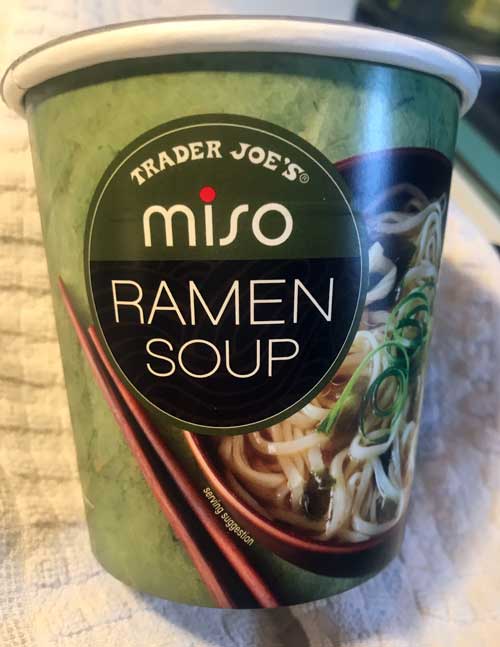
My wife bought this “MISO RAMEN SOUP”. Now she loves ramen and will usually buy her favorite, Korean Shin Ramen, which is very good. It costs more. She made this and when I asked her what she thought her review was pretty short: “I’ll never buy this again”
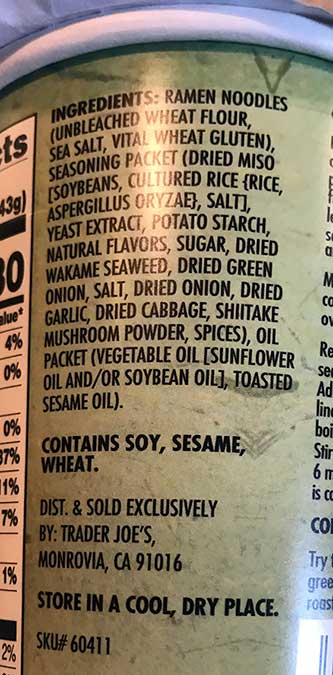
Inside the cup there’s some noodles which don’t look like the dried ramen you are used to. These are straight wheat noodles which look semi-dry (pre-boiled?). There’s not a lot of noodles. There’s a dried packet of stuff (the soup) plus a little clear packet, which we thought was one of those drying packets and almost threw it away. Nope, its part of the ramen set; The clear packet contains a little bit of oil you add along with the dry packet of miso soup.
I tasted her ramen and here’s what I thought of this product.
The Good: The broth was actually pretty decent. Better than I expected. It tastes like a Japanese miso soup broth. There was even a piece or two of wakame (seaweed) floating around in the soup. Some umami from seaweed and mushrooms. The Ingredient list reads fairly natural; you don’t see wierd names of chemicals just dried ingredients. Broth 7/10
The Bad: Ramen? Well they really messed up the “ramen” part of this “miso ramen soup”. Noodles are lousy. We both thought the noodles were not very good and to add insult to injury they are very skimpy with the noodles. These noodles are not dry but a little flexible, like a semi-dried, pre-boiled noodles? They barely had any texture or bite to them after the recommended six minutes. Very MEH as they should be the star. Noodles 5/10
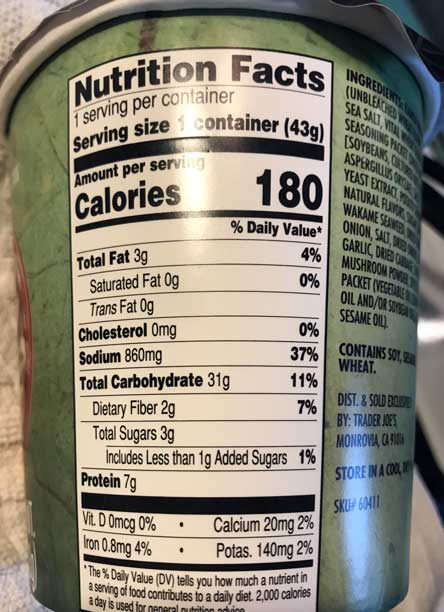
The Sodium content is listed as 870, which is almost 40% of your daily recommended level of salt. We cut that down by only using about 3/4 of the packet. Naturally that will make the broth a little less strong. It was fine for us. All instant ramen tends to have quite a bit of sodium. Always check the labels. This really applies to all the Asian products at TJ’s.
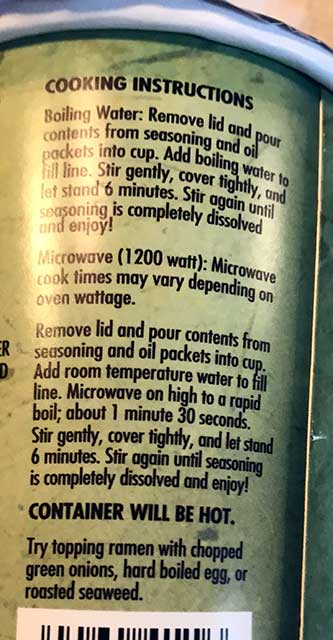
If you decide to actually try this, it may be better if you try adding a poached egg and chopped scallions as they suggest.
$1.89
I had an idea that since the broth was not bad but the noodles are Meh I thought one might combine this with the packet of cheap ramen dried noodles you might have in the house. I used to get them 5/$1 a few years back!
If you want good ramen, Korean Shin Ramen runs rings around this and most instant ramen though it costs more.










 Trader Joe’s Rants & Raves (mostly raves, a few rants)
Recent Comments