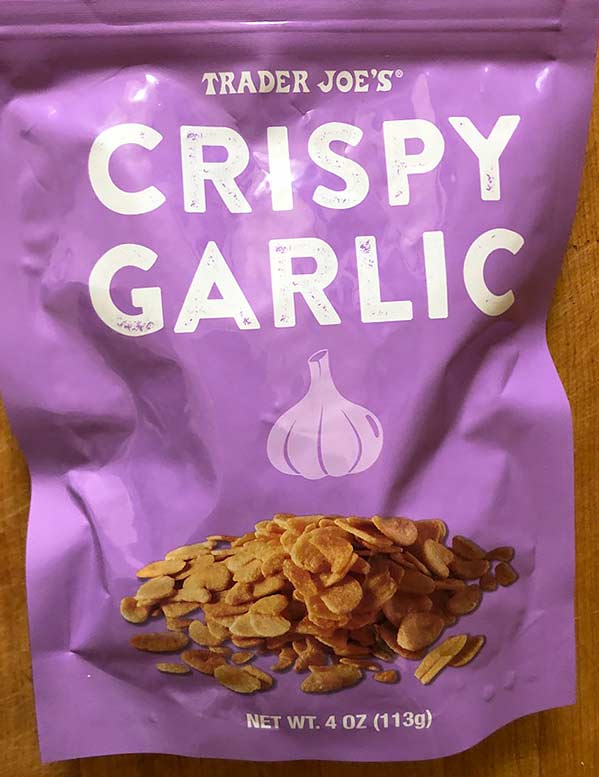
First they came out with the CRISPY SHALLOTS which I like a lot. Now they’ve come out with something similar but it’s CRISPY GARLIC.
This new product is a winner. Possibly even better. For me, a must try. Crispy slivers of garlic toasted until nutty. A great topping, or ingredient. Lasts a long time so a great item you can keep in the pantry for whenever you need it. This is a super Asian (or Italian or anything) garnish.
Trader Joe’s says: “Trader Joe’s Crispy Garlic ably demonstrates, when sliced thin and fried to a glorious golden brown, garlic’s gifts easily extend into the textural realm, too. We tried plenty of options before finding this iteration of Crispy Garlic, which is brought to us by an expert supplier in Thailand. Only their Crispy Garlic was able to capture that flavorful-but-not-bitter, nicely-fried-but-not-tough, crunchy-but-still-melt-in-your-mouth quality that our tasting panel adored. We think you’ll adore it, too. Trader Joe’s Crispy Garlic is excellent as a topping on stir-fries, salads, and scrambled eggs; pizzas, pastas, and pad Thai; or even burgers, baked potatoes, and bánh mi. It can be mixed into homemade cheesy dips and casseroles, sprinkled over noodle dishes or roasted veggies, or even just enjoyed over a bowl of freshly made rice.” – Trader Joe’s
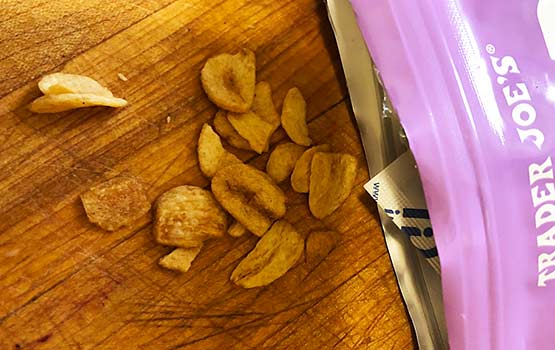
Tru’ dat. The little thin crisps of garlic are so just so flavorful and tasty. We tried it, and instantly fell in love with this stuff. We tried even eating them as is just out of the bag. Intense but tasty!
Think little thin chips of fresh garlic, cooked till golden brown, super crunchy and crispy. The garlic flavor is a bit milder and mellowed from the frying. As they say it’s cooked just right, before the point of bitterness.
Toss these chips on just about anything. We’ve been trying it out on just about everything we can think of to put it on and whatever we tried seemed to work. Noodles. Salad. Add some on top of plain Rice!
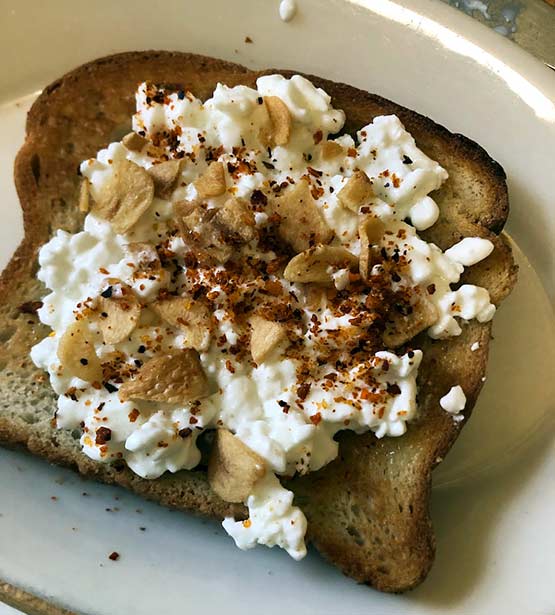
Here I put some on top of cottage cheese on top of a toasted slice of their Sourdough Sliced bread and added some spices, and the combo was super yummy.
You can crush them up with your fingers to get smaller bits too (I crushed them up over buttered corn. Yum!)
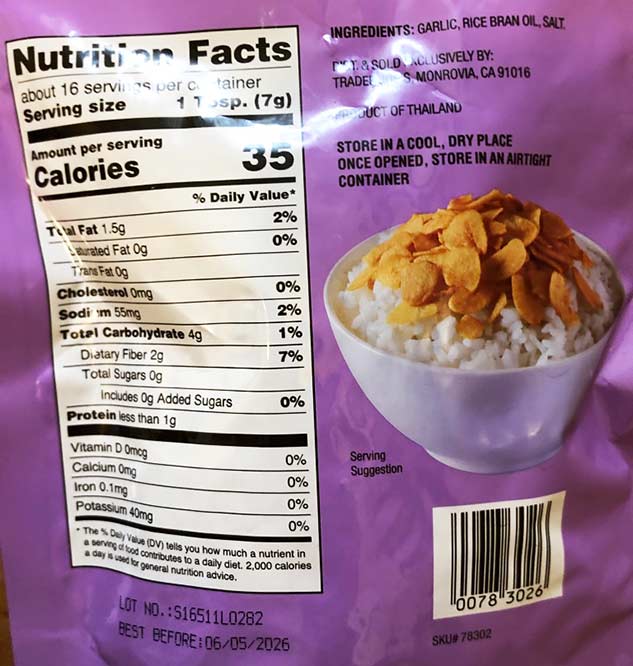
$3.29 (4 oz) I am just guessing it was probably about a pound of garlic before. Its got just 3 simple ingredients, garlic, oil and salt. It’s not greasy at all. Just crispy. Keep it tightly sealed in the foil pouch and it should stay that way for a long time.
These I have gathered have gotten to be quite popular especially due to a semi viral “hack” about them on social media like Instagram and TikTok.
The hack is basically you cook these in chicken broth and drizzle with chile oil. So basically chicken dumplings in chicken soup. Almost like they were wontons.
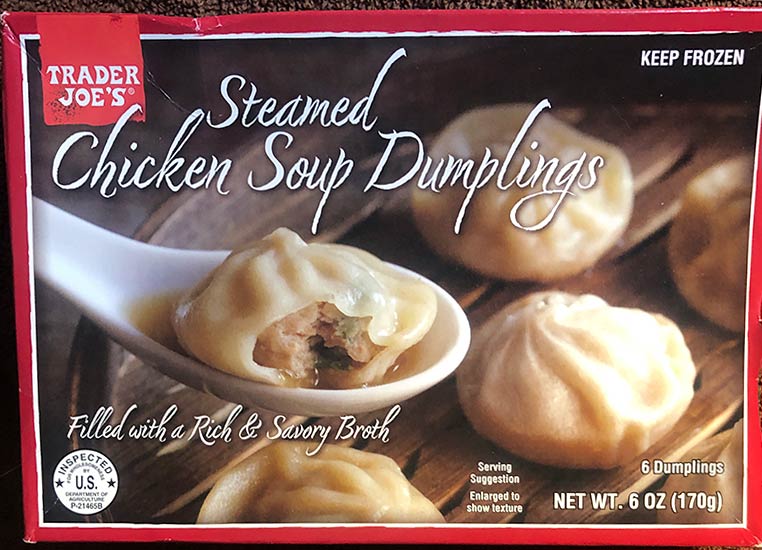
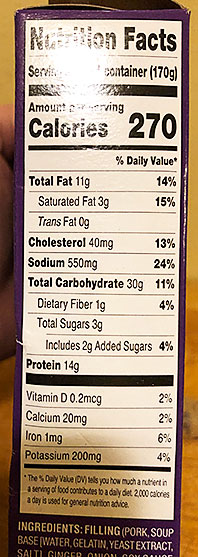
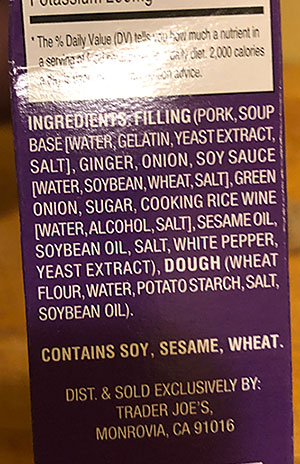
I previously reviewed the other version of these that Trader Joe’s has, the more typical pork version of these dumplings. Pork and Ginger Soup Dumplings. I thought I would give these Chicken Dumpling versions a try as well.
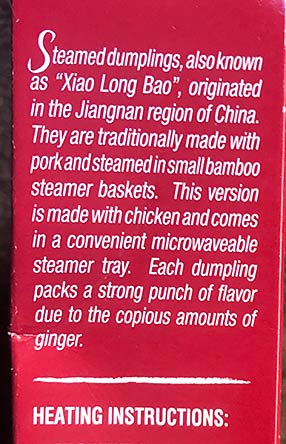
OK, they are decent as long as I really just think of them as another kind of dumpling and not specifically “soup dumplings” aka “xiao long bao” or XLB, those prized jewels of the Chinese dumpling art. I am a huge fan, a devotee of XLB. Any good xiao long bao as I previously mentioned in that other review about TJ’s Pork Soup Dumplings.
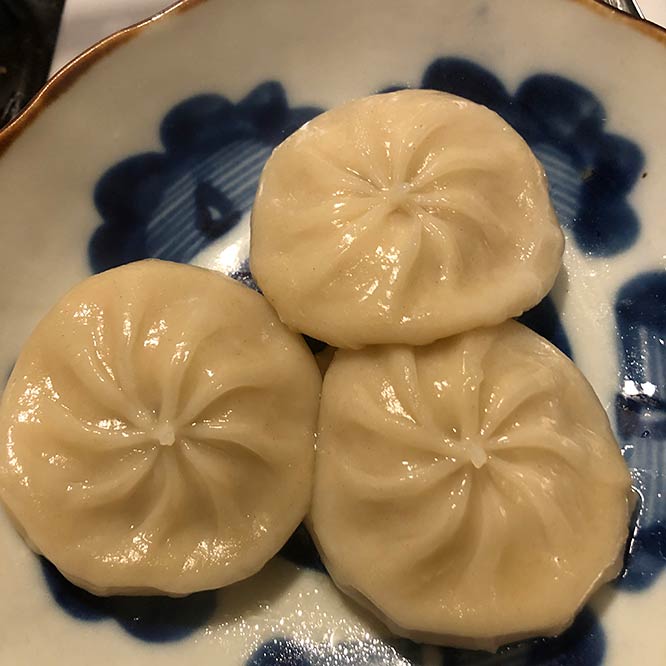
I made these chicken soup dumpling two ways. First, the simple, classic way of just steaming them, then enjoying with a dipping sauce. For what they are and what they cost, I would say they were not bad (If not really “soup dumplings”). Round chicken dumplings.
Next I wanted to try this viral hack going around…. So I also made them this time cooked in chicken broth.
Yes, cooking the dumplings in chicken broth gives these an edge. First, serving them this way makes these into more of a meal or “dinner” rather than being an appetizer or snack.
I actually had some of my own homemade chicken broth which I had made a few days before, and let’s face it that obviously helped improve the whole dish. Tip 1: use good chicken broth.
PROS- I was pleasantly surprised by how tasty I actually found the chicken filling in these dumplings. The filling is definitely a step up. Very rich and meaty tasting having a good amount of chicken and really being loaded with ginger. The ginger gives these a great taste. The filling in these is so much better, compared to the standard Trader Joe’s chicken gyoza/dumplings (plastic bag, $4). No comparison. These cost more and you can taste the difference. So for the upgraded chicken Filling, I give these a big plus.
CONS – Where these lose ground with me, are the actual wrappers. I wish they had better quality wrappers. The dough wrapper here just turned too soft and mushy too easily. Yes maybe thats just what sitting in hot soup does to them, though frankly I must have eaten a thousand bowls of steaming hot wonton soup in my lifetime and never find the wrappers as soft and mushy as these became. Second, the “chicken soup” in them? Minimal. At best. Not nearly enough soup inside (though if eaten in broth, this may be a moot point, I admit).
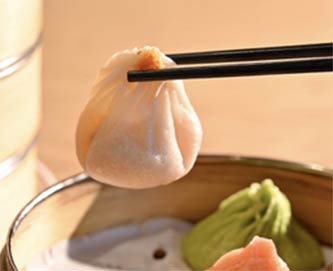
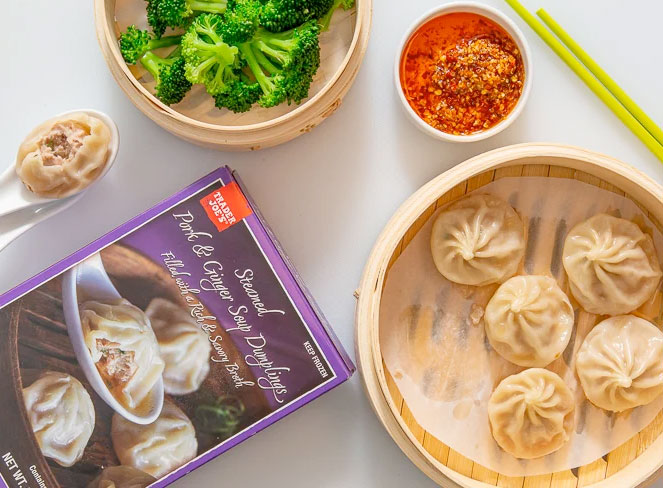
An authentic soup dumpling has perhaps a tablespoon or more of liquid. These had maybe a teaspoon if that? These are fairly flat, like little pucks while real XLB are round and a bit tall, so can fit more stuffing inside. Real XLB you can be picked up with chopsticks (see pic) – which is next to impossible with these Trader Joe’s “soup dumplings” as they just don’t have enough extra dough at the top, as you can see in this authentic Xiao Long Bao.
(what an authentic soup dumpling looks like, image from Nan Xiang Xiao Long Bao. See how much filling and soup they have?)
The fact is unlike many kinds of dumplings, xiao long bao don’t really freeze well. The wrappers are delicate. So real ones are almost always made fresh to order. As far as frozen xiao long bao, I’ve had them from supposedly high end vendors, but did not find any equal to eating them fresh in a restaurant by a long shot.
HOW TO COOK Trader Joe’s STEAMED CHICKEN SOUP DUMPLINGS:
Steamed in Microwave: Follow the package directions to put them in the microwave for a little less than two minutes right in the tray they come in.
Stovetop: I made them in this traditional way, in a steamer basket. Steam for 8-10 minutes until very hot.
Cooking In Chicken Broth: If you are doing the viral hack of making these in chicken broth, unless you have some good homemade broth, I would suggest getting the best quality chicken broth you can buy. Most broth in cartons are just OK. Nothing like homemade. I have found the Trader Joe’s Low Sodium Chicken Broth to be “just ok”. FYI, The NY Times said that Target’s GOOD AND PLENTY broth was among the best of store bought chicken broths in a carton. Yes you would be adding a bit of soy sauce and chili oil which will give things a bit more of a taste. Rather than the typical carton broth which everyone is showing you they pour on these dumplings, I would suggest trying Trader Joe’s BONE BROTH (sold in the refrigerated case, $5). I have found that broth pretty good, closer to home made chicken stock than TJ’s carton broths. Real chicken broths gel up when cold from the collagen in bones. The TJ Bone Broth is a bit gelled.
Add a bit of soy sauce, sesame oil and chili oil (my chili oil of choice would be the real deal: Lao Gan Ma) over Trader Joe’s CHILI CRISP but it can do it a pinch.
Again if you think of these not really as XLB but as decent frozen chicken dumplings I would say these are worth trying, especially if you try the viral dumplings in soup with chili oil hack/recipe.
Trader Joe’s STEAMED CHICKEN SOUP DUMPLINGS $3.49 (for six dumplings)
Review of Trader Joe’s steamed PORK AND GINGER SOUP DUMPLINGS (aka Xiao Long Bao)
Now I am what you might call a devotee of Xiao Long Bao or “soup dumplings”. I am crazy for them. I mean really good ones and thankfully New York City has a number of places where one can get excellent soup dumplings. One of my favorite places is in Flushing, Queens at a well known restaurant that specializes in them called, “NAN XIANG XIAO LONG BAO “(If you can, go there!) This place is famous for soup dumplings and the restaurant even has huge glass windows so you can see into the kitchen and watch a swarm of kitchen workers making them continuously in front of you. First rolling out the delicate dough wrappers. Stuffing those wrappers with the famous stuffing that has lots of gelatin which dissolves into liquid when they get steamed to make a bit of soup inside each one.
I think I had these Trader Joe’s version before and was not overly impressed. Especially as I had microwaved them – which I’ve now learned is not the best method (steam them)!
What prompted me to give them another try was we recently went to a new smaller sister place called Nan Xiang Express which recently opened up in New York City. We went to one on the Upper West Side and got the classic pork Xiao Long Bao.
Trader Joe’s version can’t equal those of course. Never the less when I made the Trader Joe’s dumplings the next day to compare them, we actually enjoyed them. This time I steamed them which gives a better result. Both of us said the same thing “Of course these are not as good as the restaurants but these are actually tasty. These are not at all bad.” For what these are, for the convenience and the price I have to say these are well worth your trying.
We enjoyed them with the sauce I made*. Sure the wrappers in these are a bit thick, not anywhere near as delicate or beautifully plated like Nan Xiang’s but again overall these are quite tasty and they did have a little spoonful of hot soup which you could suck out. Pour a little dumpling sauce* on and these make a pretty yummy snack or appetizer. Sure you can build a dinner around these (figure six per person for dinner plus some veggies, rice and other goodies)
Some people I hear are saying making these in soup and eating them like that.
Certainly the price here is great, six dumplings for $3.49 (at the restaurant: these are $10 for 6 pork dumplings and about $12 for the even yummier pork and crab version).
RECIPE: CLASSIC SOUP DUMPLING SAUCE (mix 3 parts Chinese black vinegar, 1 part soy sauce and a small knob of peeled fresh ginger, julienned or grated)
HOW TO COOK TRADER JOE’S SOUP DUMPLINGS – TIP: The traditional steaming method will give you a better result than microwaving these!
STOVE-TOP/STEAMED: “Fill a pot fitted with a steamer basket with water and bring to a boil. Place dumplings into steamer with space between them. Do not crowd. Cover with lid and steam for 8-10 minutes until fully heated. Remove carefully. Caution: these dumplings will be really really hot! Carefully pick up dumpling (chopsticks) and place on a spoon. Carefully bite dumpling to release the soup into the spoon. Slurp carefully. Eat dumpling”
Enjoy these with a little dumpling sauce. The way I eat these is I pick up a dumpling very carefully with chopsticks by the top, and finagle it gently into a deep size spoon (you don’t want to pierce accidentally and loose any soup inside). Carefully nibble a hole and suck out the soup and pour a drizzle of sauce onto my spoon.
A little bit of chili crisp too can be nice if you like spice (my jam is the real Lao Gan Ma).
“From the same supplier that helped us bring Steamed Chicken Soup Dumplings to Trader Joe’s, we are thrilled to introduce Trader Joe’s Steamed Pork & Ginger Soup Dumplings. Inspired by the same original soup dumplings, xiao long bao, that originated in the Jiangsu province of China, this type of dumpling is traditionally prepared in a xiaolong, the small bamboo steaming basket from which it gets its name. In English-speaking countries they’re most often called Soup Dumplings because they are filled with hot soup (and therefore must be eaten carefully!) Xiao long bao are traditionally filled with pork, so this second entry in our freezers adheres closer to culinary tradition.”
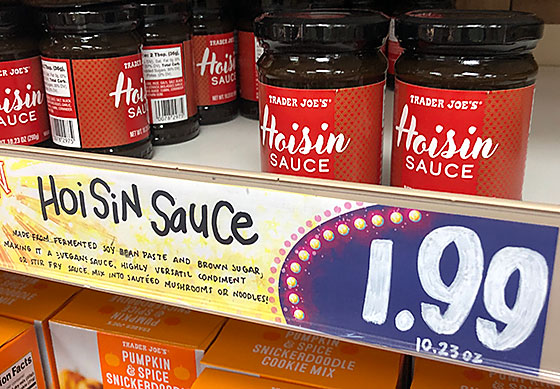
Trader Joe’s has recently introduced their own HOISIN SAUCE.
What’s hoisin (hoy-sin) sauce you say? Hoisin is a classic Chinese sauce . I’m pretty sure I first learned of it eating Peking Duck, as its the traditional classic slightly sweet sauce spread on the pancakes with the duck and scallions.
“Made from fermented soy bean paste and brown sugar, making it vegan. Highly versatile condiment for stir fry sauce. Mix into sauteed mushrooms or noodles“
“Like any truly great #HoisinSauce, ours expresses a certain sticky sweetness, savory character, and velvety texture that make it exceptionally versatile. It’s made with a base of fermented soybean paste, black sesame paste, and brown sugar, and seasoned with aromatic spices like star anise, garlic powder, coriander seed, and Szechuan peppercorns.”
Most people know hoisin sauce from eating Peking Duck served in buns or pancakes. Naturally it matches well with duck but also chicken, pork and perhaps even a bit on a hamburger. You can use this with other ingredients (garlic, ginger, soy sauce) to add to Asian dishes, like stir fried dishes, and noodle dishes, etc or meats. Its versatile and good to have in the fridge for making Asian dishes.
A good versatile Asian sauce to to have in the fridge. Will last a long time.
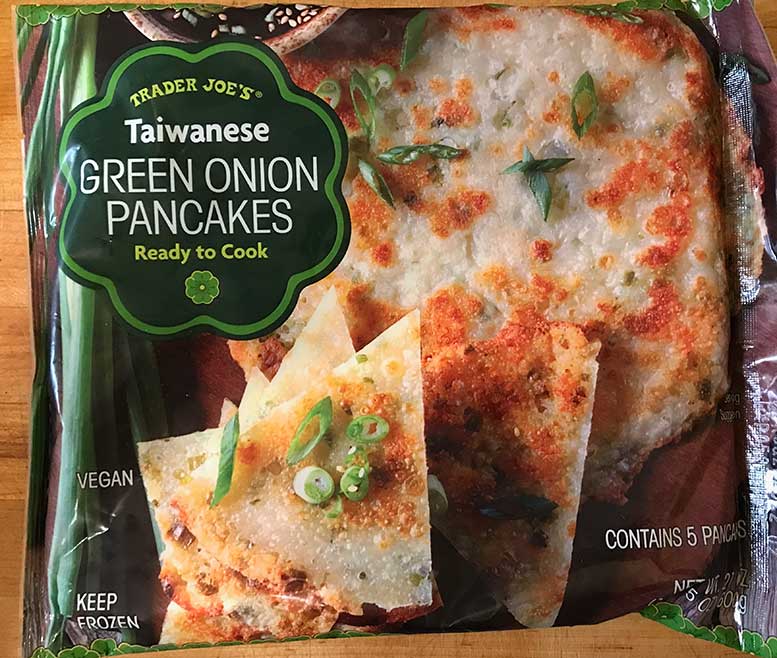
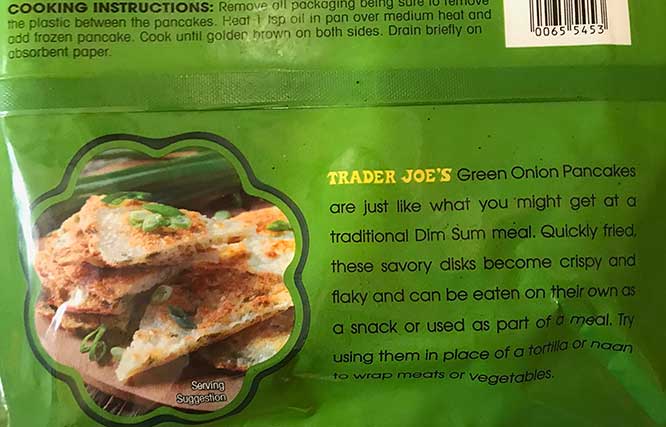
“Trader Joe’s Green Onion Pancakes are like what you might get at a traditional Dim Sum meal…quickly fried, these savory disks become crispy and flaky. Eat as a snack or part of a meal. Try using them in place of a naan or a tortilla to wrap meat or vegetables” (from the package)
Trader Joe’s Taiwanese Green Onion (Scallions) Pancakes are a very popular Trader Joe’s product… and for good reason. These are quite tasty, easy to make and pretty inexpensive. Made simply and eaten As-Is these can be quite tasty. But these Scallion Pancakes are also easy to “hack” and turn into something more.
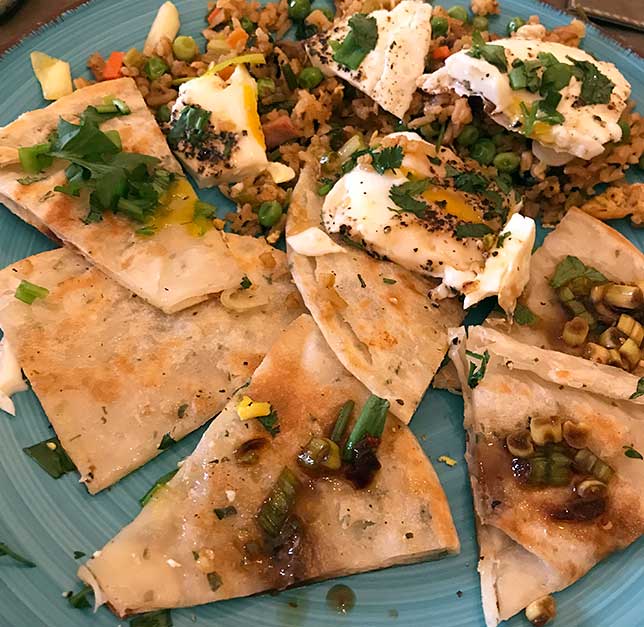
Just add an addition or two and you can make them into something a bit better and more substantial. For instance, the easiest hack could be as simple as “put an egg on it”. Just add a egg, fried or scrambled on top.
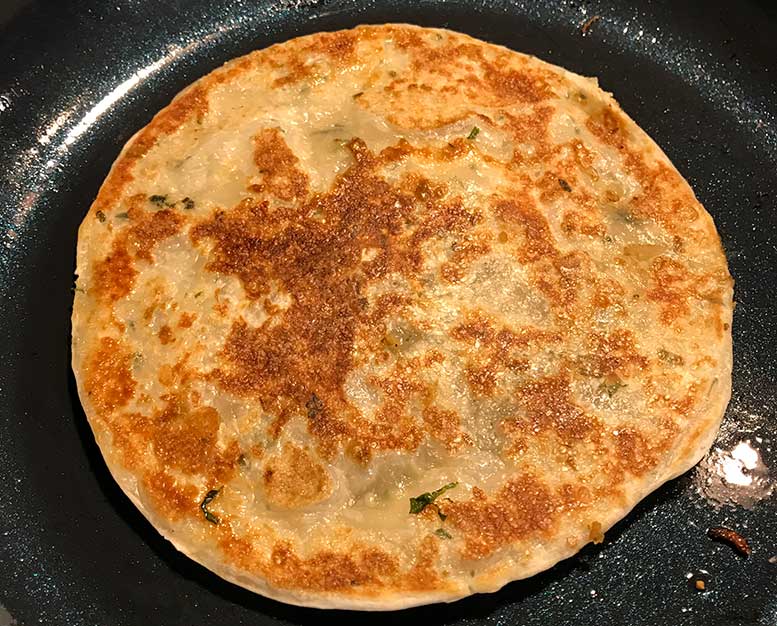
(Here is what my pancake looked like after cooking. Golden brown and delicious!)
VEGAN – PRODUCT OF TAIWAN
Honestly if you’ve never tried these before, run over to Trader Joe’s right now and get some. That is if you can find them! These sometimes get SOLD OUT, because as mentioned they’re quite a popular item, and at $2.49 for a package of 5 pancakes, let’s face it, these are one of the more affordable frozen items at Trader Joe’s. Basically just fried dough with some green onions but yummy.
TJ’s Scallion Pancakes make a pretty quick, pretty easy appetizer, snack, side dish, lunch. With some tweaking, they can become the platform of a complete dish, depending on how you serve them and what you eat with them.
How easy are Trader Joe’s Scallion Pancakes to make? All you have to do is take a frozen pancake and put it in a pan with a little oil. Let it cook for a 4-5 minutes until browned. Turn it over. Cook another few minutes.
In Chinese, these pancakes are called Cong You Bing (蔥油餅) which are savory pancakes made from a wheat dough, oil (or better still lard!), green onions and salt. Often sold from street vendors. Cheap and very popular. I’ve eaten these made fresh in front of me from Chinese street vendors or stalls in Flushing, Queens.
Naturally one can’t quite compare TJ’s pancakes to one handmade in front of you. However, these are still tasty, not to mention very convenient for whenever the mood strikes.
I do have one complaint about Trader Joe’s “green onion pancakes”. These don’t have nearly enough green onions. Not by a long shot. There should be a ton and these only have a small handful.
Authentic Chinese / Taiwanese scallion pancakes are made with a ton of scallions, and these Trader Joe’s pancakes skimp on the green onions. Probably to keep them cheap. However this is easy to fix and correct. Just add some chopped scallions when you serve them.
Ideally I suggest whenever you are going to make these be sure to also get a package of scallions ($1.29) too so you can scatter a handful of chopped scallions over your pancakes, and/or put them in your sauce. Personally I love fresh cilantro with these as well as well as extra scallions.
The simple way to enjoy these is to just make them as directed and eat with some kind of a dipping sauce. I’ve put an easy recipe for a basic Asian sauce further down. But in a pinch even just mixing up a little soy sauce, garlic, ginger and Chinese black vinegar (or rice vinegar) can work. Or even easier, use some Asian Trader Joe’s sauce you like such as the: “Gyoza Sauce”, “Sweet Chili Sauce”, “Chili Crisp” and a little soy sauce.
Recently my wife and I ate these for dinner (picture above). We added a fried egg for extra protein. Along with the pancakes we ate fried rice. That combo is great. I happened to have fried rice which I had made the night before. You could use a frozen Trader Joe’s versions, for example their popular JAPANESE FRIED RICE.
HOW TO MAKE TRADER JOE’S GREEN ONION PANCAKES:
STOVE TOP METHOD – (Cook right from frozen) Pour 1 tsp of vegetable oil in a nonstick or cast iron pan, set to medium heat. After a 30 seconds of heating, swirl the oil, then add a pancake to the pan (be careful, it can spatter). Try to resist the urge to touch or move it for a good minute or so, after which you can check the bottom gently using a spatula to lift it to see the underside. You want to let it get all nice and Golden Brown. (see my first picture). You can rotate a pancake to get even browning.
The first side might take about 3-5 minutes (from frozen). Cook till it looks “*golden brown and delicious”. When your first side is done just flip it over carefully., to let the other side cook.
Don’t press hard with the spatula to keep them flaky. Keep an eye on it. The second side which will take less time to cook as its no longer frozen. When the second side is done (two minutes?) and looks golden brown, remove it and put on a paper towel to drain any excess oil.
Keep pancakes warm (cover with towel, or put in oven on Low or Warm)
If making more than one, now get the next one cooking. (TIP – Each disk is about 7 inches in diameter so if you want to make a few at a time, you might to use 2 pans or a griddle.
When you are ready to serve them, you can cut them up into eights or quarters. Enjoy asap while they are warm and crispy, along with your dipping sauce (recipe below)
AIR FRYER – I’ve seen people online say these can be cooked in one.
Microwave? No way, they need to get crispy and browned! Thats not an option with these.
Now while these are perfectly fine just naked and “As-Is”, as mentioned, you can add things. For example, as I mentioned you can top them with a fried or scrambled egg. You can fold the pancake like a taco with the egg in the middle and eat it like that (in a paper towel) which is actually a typical way one might get these served on the street in China or Taiwan. So instead of Naan or a Tortilla use these.
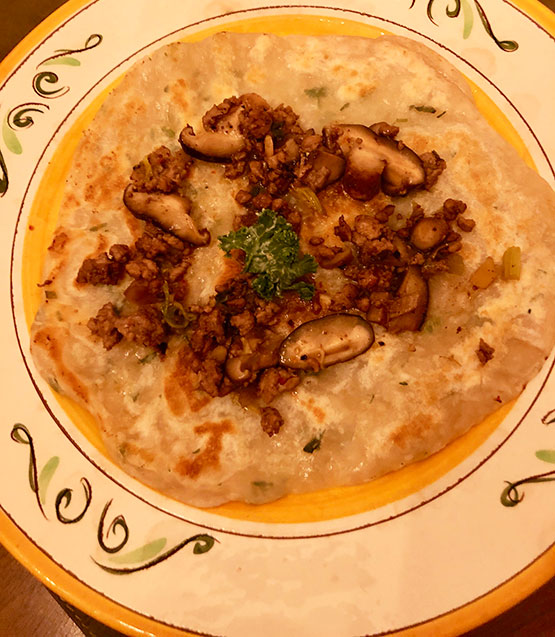
Pancakes topped with sautéed shitake mushrooms and seasoned ground pork
You can be as inventive with these as you like. For example, use these as a base and add toppings.
Cooked seasoned ground beef, pork , chicken, mushrooms or tofu? Maybe left over rotisserie chicken pulled into shreds? Perhaps some grilled shrimp. Or grilled tofu. Grilled portobello mushrooms. You can even put cheese on them for a cheesy Chinese pancake.
Here’s one easy HACK / combo I came up with: SILK ROAD PANCAKE WITH KEBABS. These pancakes matched well with TJ’s Middle Eastern Beef Kebabs for a “Silk Road” combination which is perfect with these. Add a cooked kebab to a pancake,, then eat folded up like a tortilla. Add your favorite sauce (garlic spread, greek yogurt, chili oil…)
Typically these pancakes are usually served with a dipping sauce. You can easily make an Asian dipping sauce (see below for a simple basic recipe). Any store bought sauce you like can work too. Say TJ’s “Soyaki” or Gyoza Sauce or Sweet Chili sauce or the like. TJ’s Chili Onion Crunch, of course too is a great too. My favorite real deal addition for these pancakes is the original chili crisp, Lao Gan Ma, to which I have a serious addiction (If you don’t have any Asian markets here’s a link to it on Amazon : Lao Gan Ma )
BASICASIANDIPPING SAUCE:
2 tbl TJ’s Low Sodium Soy Sauce
2 tsp Chinese black vinegar (if you don’t have it you can use rice vinegar or even balsamic)
1 lg clove garlic, crushed
1 tsp brown sugar or honey
Optional – Fresh grated ginger. A drizzle of Sesame Oil (if you like spicy mix in some Chili Crisp or Lao Gan Ma)
Add chopped scallions.
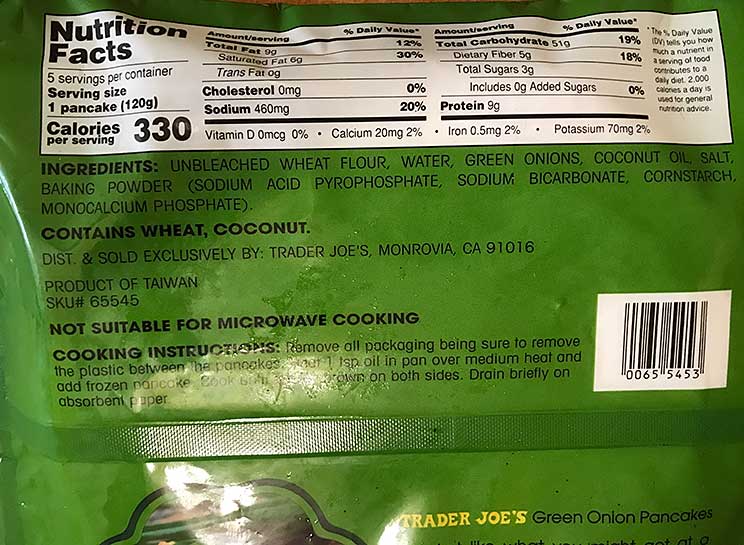
Checking the Nutrition label 1 pancake contains 330 calories.
Trader Joe’s GREEN ONION PANCAKES, $2.49 (five pancakes) I would buy this again.
Need some ideas to use these as a starting point for something ….? Check out these ideas…..
Those may be even better but are different. Korean PaJeon have lots of scallions and vegetables. So they cost a bit more but are terrific and may even be easier to find in stock. I think the Taiwanese scallion pancakes seem to have gotten so popular they get sold out kind of fast as some people buy 5 or more packages (you know who you are, so please leave some for the rest of us!)
UPDATE-1 (Winter 2023) – Haven’t seen them for months. Sold Out / Out of Stock at two different TJ’s I go to. Beginning to wonder if these are too popular for their own good?!
UPDATE-2 (Mar 2024) – FINALLY! Seeing these back in stores! Yeah! Hopefully you find them.
PS – Believe it or not I’ve actually made these Scallion Pancakes from scratch a few times. Sure, it’s a bit of work but frankly these are not very hard to make yourself. Of course they are even better, so think about making them. All you need is flour, scallions and oil. Check out these recipes (links) and think about giving it a try one day!
(NOTE: Since when I originally wrote this, Trader Joe’s came out with another flavor called, “SPICY GARLIC AND SESAME SAUCE” (black package). I recommend that version (black)over this one (red) as the sauce in that version is much better than this one! (But the cooking ideas in this post apply to both)
Trader Joe’s Squiggly Knife Cut Style Noodles with Soy and Sesame Sauce
One could easily call me a noodle loving foodie, as I will go for most any Asian noodle dish you put in front of me.
So when I first saw these Trader Joe’s Noodles they looked very promising. Not to mention they say “Made in Taiwan”. Asian wheat noodles like these with ruffled edges are quite typical and prized as the ruffle edges hold onto a sauce. I often see these type of noodle for sale, dried in a Chinese/Asian supermarket. So nice to see them at Trader Joe’s as for most of us that is way more convenient.
Soon after Trader Joe’s came out with these noodles I learned they really blew up on social media like Tiktok and Instagram. They became such a big thing that trying to find them at Trader Joe’s became next to impossible (at that time). These were selling so fast, shelves were emptied almost as soon as they were filled*. Things got so nuts, that “food scalpers” were even actually RESELLING THEM for profit* for way more than they cost! Argh!!%#@$
(Update-2, Aug 2023) Things seem to have calmed down with these noodles, and I’m able to find them on on the shelves.
(2025 ; this MIA issue doesn’t seem to exist anymore, they are way easier to find now, almost always on the shelves)
So my first big question was : Why are they so popular? Are these really that good? I had a feeling one simple reason was simply the price.
For $4.99 for a package of 4 (or $1.25 each) I was pretty sure people basically were viewing these as “dollar ramen”. And I mean the cheap kind, $1 ramen (or 2 for $1) and NOT quality Korean or Japanese ramen packages that cost $4-5 each.
I grant you these “squiggly noodles” look better than cheap $1 ramen. Though, if you only cook them as them as directed, meaning just eat these noodles and the (frankly crappy) “soy and sesame sauce” these come with, my answer to the question, “are they that good” is qualified on how you make them. Make these exactly As Is (noodles plus sauce packet)? Like that, these are at best, Mediocre. Make them as directed on the package and I give these maybe a 4/10.
HOWEVER I think these noodles have POTENTIAL , if you bother to fix them up! Make a little effort to fix them up a bit and you can come up with a tasty noodle dish.
(I found their “Soy and Sesame” sauce pretty crappy)
So my suggestion is do not even bother with the included (crappy) sauce packet. Its not good. “Soy and sesame” sauce? Ha! Just check the ingredients which reads as mostly chemicals. I say don’t use that cheap crappy “sauce”. ADD YOUR OWN SAUCE. Yes you heard me. To fix these up use the noodles plus your noodle! (again, the black package has a much better sauce!)
Consider the noodles a blank canvas that you will fix up. With a little effort you can turn these noodles into a decent tasting noodle dish. Basically you will make some sauce, and likely add some of your own things.
Then they go up to perhaps 7/10.
The package says: “Cook the Noodles in boiling water for four minutes, drain, then toss in the Sauce and prepare to be pleased.”
I did that and was not very pleased at all. Very mediocre. If you do it bare bones, simply cook these and mix with their packet of crappy “soy/sesame” sauce (again — the other “spicy garlic” version in the black package actually has a sauce that is way better which comes as two sauce packs).
Cooking (as per the package’s instructions):
The very first time I made these, I did it exactly as it says on the package: “Bring 4 cups water to a boil. Add noodles. Cook 4 minutes. Drain and add sauce packet”. Result? A big Meh. So mediocre as the sauce packet that comes with this version kind of sucks. If you only cook noodles and mix in the packet you will end up with an extremelymediocre noodle dish.
Now while these aren’t superb noodles, the noodles are decent enough. They have potential. The ruffled edges are actually great at holding sauce. So you need some kind of good sauce with these.
So my first advice about TJ’s Squiggly Noodles (Soy/Sesame) is simple. Come up with your own sauce. Add other things. Do this and these noodles can become a dish you will really enjoy. It won’t take much effort. Really!
So the second time I made these noodles I took a different take. First, I knew I would add my own sauce, and not use that packet it comes with. I also thought I would use these noodles to make a Stir Fry dish. So here’s what I did.
First I cooked (or more like par-boiled) the noodles. I reduced the time from 4 minutes to 2 minutes. I am par-boiling them as they will be cooked more stir frying them then adding some sauce.
Cook 2 minutes, drain them, and run under cold water. Put drained noodles in a bowl temporarily. Mix in 1 tsp of oil, stirring to coat (this helps noodles from sticking together).
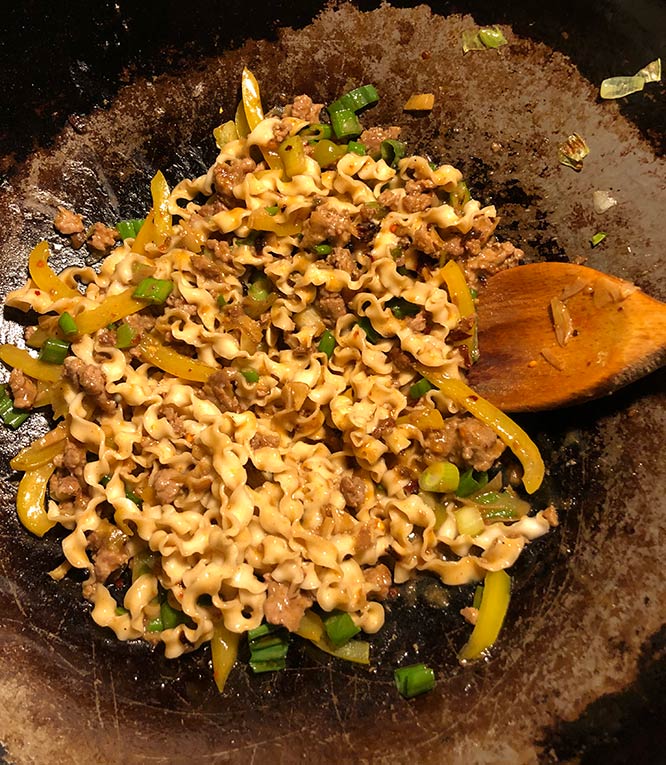
In a wok I sautéed chopped garlic, ginger, green onions and a few veggies I had in the fridge for a minute in a tablespoon of oil. I pushed those things up the side of my wok and poured in a little more oil I made a scrambled egg in the center of the wok. When the egg was about 75% cooked I tossed in the par-boiled noodles, and stir fried everything together for about a minute or two. Now I added my sauce* mixture and stirred everything gently to coat the noodles. I gave them 30-60 seconds like that to come together and let the sauce reduce a bit.
I plated the noodle dish, tossing on some chopped scallions, cilantro, sliced cucumber. Drizzled on a bit of Toasted Sesame Oil. Wow, this noodle dish was so much better it wasn’t funny. These noodles now tasted good! Here’s the dish (and yes I know I should have cut the cucumbers way thinner!)
So most important is make or add your ownsauce. Add a few things. Here’s some basic ideas….
(Quick basic Chinese saucerecipe: In a small bowl add 2 cloves garlic, crushed. Add 1 tbl soy sauce, 1/2 inch fresh grated ginger. 1 tsp brown sugar. Add 3 tbl of water and mix well.
OK, that’s a start. If you want more flavor consider adding : 1/2 tsp oyster sauce, 1 tsp black vinegar (sub: rice vinegar), toasted sesame oil, 1 tsp Gochugang. ) A heaping tbl of crunchy peanut butter can work great in a sauce with these noodles. If you use that, mix it with 2 tbs water to thin it out.
Oh come on, is that too much work for you? Ok, then just use a prepared Asian sauce for example TJ’s SOYAKI sauce plus Chili Onion Crunch. Maybe TJ’s GOCHUJANG sauce mixed with 2 tbls water, 2 cloves of crushed garlic and some Soy sauce. Maybe TJ roasted sesame oil.
Still too much work? Fine, add some soy sauce, butter and black pepper.
Almost anything will be better than the poor “soy and sesame” sauce this comes with. If you insist on using the included packet, use no more than half of it, then add a little a bit of low sodium soy sauce and a clove of crushed garlic, and peanut butter thinned out with some water. Toss on Chili Crunch.
Of course you can add veggies. Proteins. Just look in the fridge or freezer and see what you have that you could add. With just a bit of effort will figure out what you like on these noodles.
(AGAIN, noodles in the the red package has a pretty bad sauce, but sauce packs that come with the black package is pretty OK! I would only buy the black package of noodles)
TJ’s “SQUIGGLY NOODLES” $4.99 (4 noodle packs). “Product of Taiwan”
I would suggest try them at least once as a stir fried dish, as I detailed above. You could come up with a great sauce topping the way Aaron of “Aaron and Claire” makes this (Check out Aaron’s Chili Garlic Noodles recipe from YouTube). With ground pork or ground beef you can make a fantastic noodle dish. Even if you just add a runny fried egg, soft scrambled eggs or a 6 minute soft boiled egg on top, that can make these better. Chopped scallions and Cilantro if you like it. A really nice topping could be my hack for easy CharSiu made with TJ’s Carnitas Pork. Proteins? Sliced Baked tofu. Sliced chicken. I usually look through my fridge and whatever leftovers I find that could work go into my dish. TERIYAKI CHICKEN MEATBALLS!? For sho’
Watch Aaron, of “Aaron and Claire” doing a Garlic Chili Noodle dish (video). One could definitely try this with these noodles which look like noodles he is using. I’ve watched so many of Aaron’s cooking videos, and I know this has really upped my cooking game for making Korean & Asian dishes especially using noodles. So check him out too if you want to up your noodle game.
920 mg SODIUM (Note: That is nearly 1/2 the recommended amount a person should eat in a day. As some packaged Asian foods have very high Sodium levels be sure to check the label when shopping for them).
Check and you will see way, way too many chemical names listed, at least for my tastes.
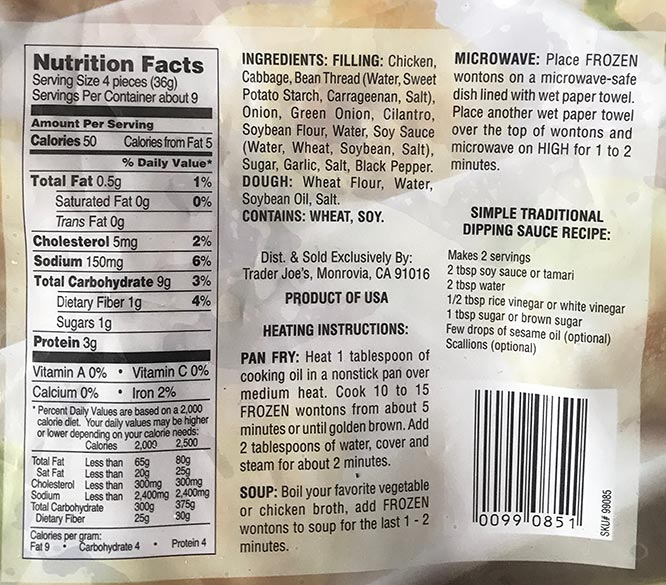
You could easily describe me as a dumpling fanatic. I’m fortunate to live in a city (NYC) with a huge Asian population and can get really excellent dumplings, such as at “Vanessa’s Dumpling House” to name just one place. So having said that, I can’t say these Trader Joe’s frozen mini wontons can compare to some handmade chicken and basil dumplings like I could get at a dumpling place like Vanessa’s, or Shiu Jiao Fu Zhou dumpling house. Stil these are kind of decent little wontons, and they are certainly convenient. So if you can’t go buy a big bag of frozen dumplings from Vanessa‘s or another Chinese dumpling maker as I do on occasion, these may be the next best thing. They seem popular. I usually will see a few people grabbing a bag at Trader Joe’s. On the web, I know there is some hack with these dumplings cooked in TJ’s Miso Ginger broth, which I tried and is pretty good (for me the broth needs more miso and way more ginger!) These are mini wontons so are smaller than regular size wontons or dumplings. These are just one bite each. They’re good made by either boiling or pan frying them. If you are doing them boiled, I like them served in a soup – a strong chicken broth (preferably homemade) or possibly one of Trader Joe’s broths or the Ginger Miso Broth (add more miso if you have that and some fresh grated ginger) They are good also cooked up as pan fried wontons. These will taste much better with a good dumping sauce. For me, that is mandatory. Also the cilantro flavor in the dumplings is very weak so buy some fresh cilantro and add some just before serving. Some people hate the cilantro’s flavor but I love it and it’s a very essential Asian taste. These Mini Wontons are $3.49 for a package (12 oz). I would buy these again.
Here’s a hack I came up with to turn Trader Joe’s Pork Carnitas into Char Siu (Chinese BBQ Pork)
Looking at a half used package of TJ’s Carnitas I had in the fridge, I had an thought. Could I turn it into Cha Siu ? I mean both are roasted pork. Let me see if by adding typical Chinese flavorings I can make them into something like Char Siu?
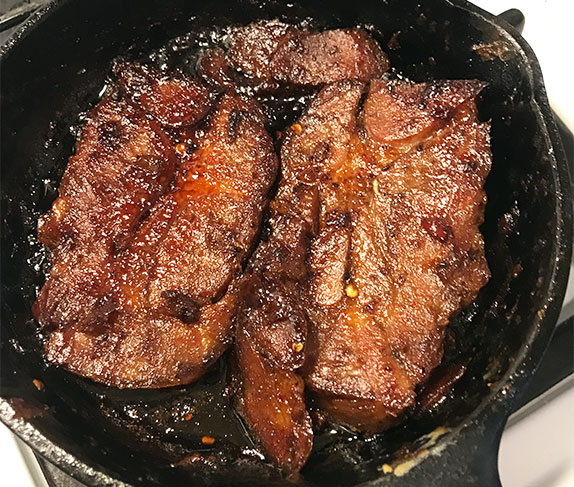
I tried it out and guess what? It worked. Those TJ Carnitas now tasted very close to yummy Char Siu / Roast Pork. My wife and I thought the hack worked and the pork was delicious. Here’s how I did it.
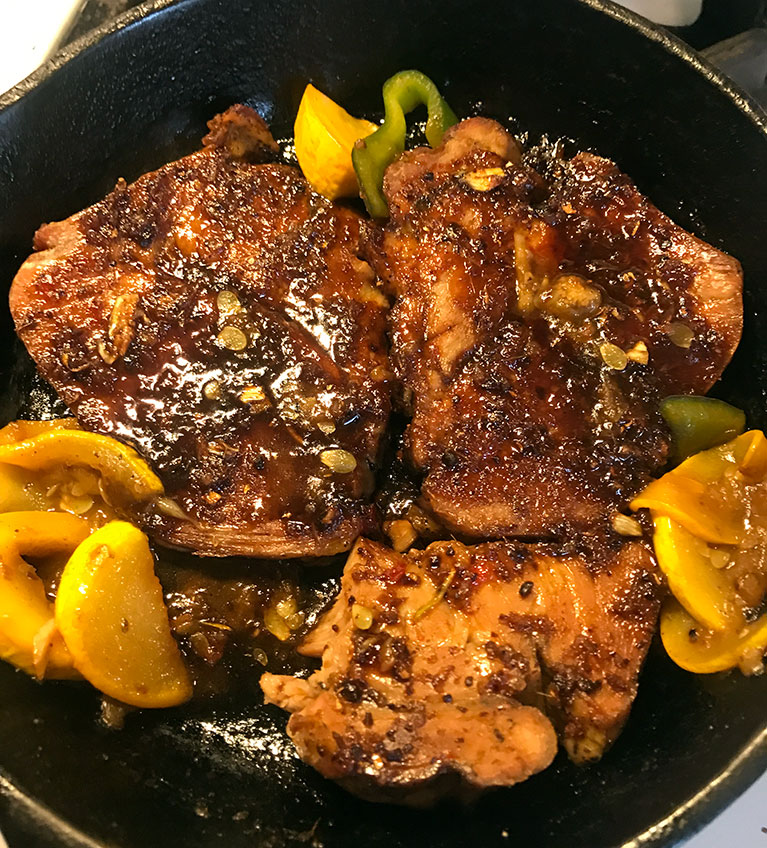
I made a Chinese sauce, grilled up a few thick slices of the carnitas, cooked it in the sauce to absorb the flavors, then spooned on more. To get that BBQ effect, I put the pan under the broiler until it had caramelized and the sauce became a thick glaze. The pork was tender, moist and full of flavor. We were amazed at how good this turned out and how much it tasted like Chinese BBQ Pork aka Char Siu.
I will be doing this now whenever I am in the mood for some easy Char Siu ! (BTW the Carnitas / Char Siu make a great topping for Ramen!) We ate the BBQ pork along side a Chinese noodle dish I made. It could be even good just on top of a bowl of rice too and with a few veggies, or any way you would use traditional Chinese Roast Pork.
Try this hack out yourself and see how easy and tasty it is!
SAUCE TO MAKE CARNITAS CHAR SIU
1 clove of fresh garlic, crushed
1/2 inch ginger, grated
1 tablespoon honey
2 tablespoons palm sugar / light brown sugar
1 tablespoon soy sauce
pinch of ground cinnamon (or 5 spice powder if you have some)
1/4 teaspoon of black pepper
1 teaspoon rice vinegar or apple cider vinegar
Mix all the ingredients together in the bowl. In a cast iron or oven safe pan, grill up your Carnitas pork slices under the broiler on low, for maybe 3 minutes, watching carefully until the pork is lightly browned. Flip and brush on some Char Siu Sauce and place back under the broiler on low for maybe 1 minute checking it carefully to make sure it does not burn. Take out and turn off the broiler. Spoon any left over sauce over the pork to coat. Put the hot pan back in the oven and let it sit for 1-2 minutes for the sauce to glaze up and reduce more in the residual oven heat (again keeping an eye on it to make sure it is deeply browned but do not let it get burned) Spooning the sauce over every 30 seconds or so.
Enjoy!
Here’s a more traditional recipe making it from scratch. I made the ingredients simpler in that you can find them all at Trader Joe’s – which doesn’t sell Oyster Sauce, for example (I wish). So if you have that and other Chinese ingredients in your larder, of course add them. The CHAR SIU recipe below in Woks of Life will give you ideas.
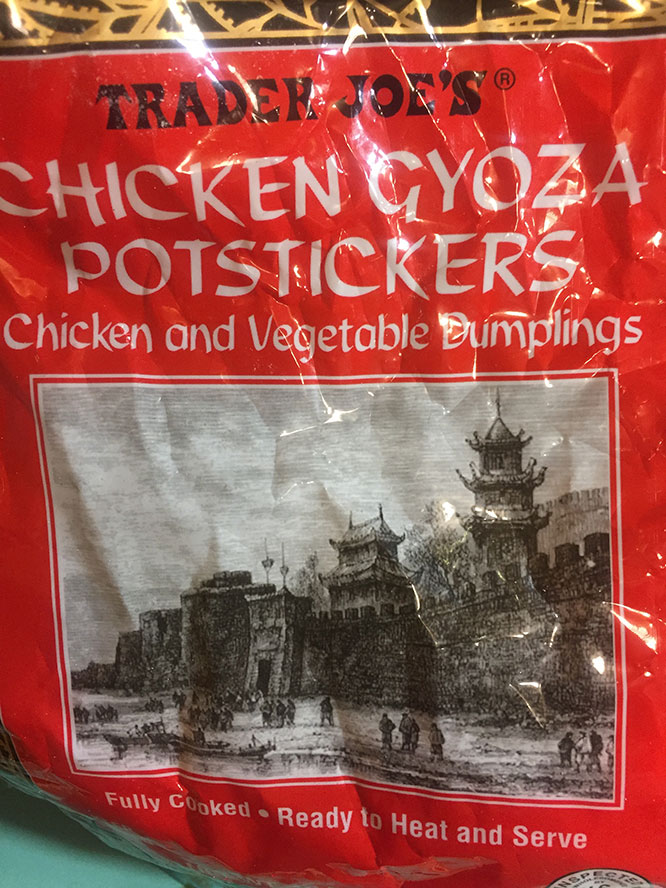
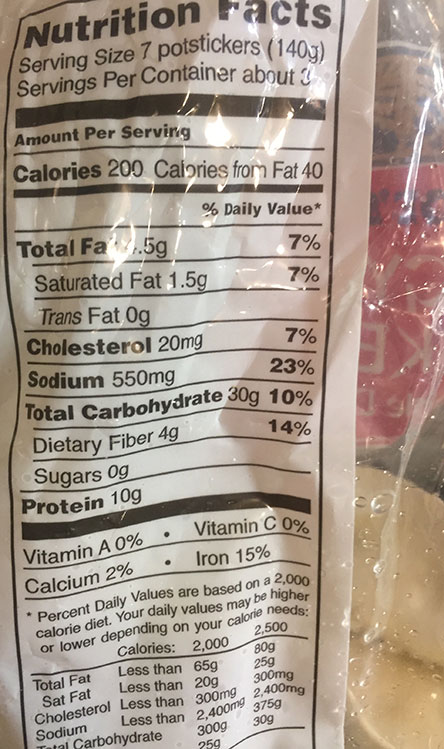
Chicken and Vegetable OR Pork and Veg. Gyoza Pot Sticker Dumplings – Perfect for now (currently Chinese Lunar New Year) or anytime of course.
Chinese dumplings are one of my very favorite things to eat. Seriously. Over my lifetime I would not be surprised if I’ve eaten a thousand of them, in one small hole in the wall place or another, mostly in Manhattan’s Chinatown or Flushing’s. Flushing especially has become a destination for dumplings with terrific places that specialize in dumplings of all kinds. I’ve even learned how to make dumplings myself, from scratch, including at times even making the wrappers! (I usually buy them in an Asian market). However that’s too much for most people. Which is where these babies come in. When you just get a craving for Pot Stickers, you can buy these frozen Gyoza Pot Stickers that TJ carries in their frozen Asian section. They’re good! They’re cheap. $3 bucks a bag. Wow.
Now I am not going to say that these dumplings can measure up against my favorites dumpling joints. Never the less the fact is I buy these bags of dumplings all the time to have on hand in the freezer for whenever I get a dumping craving and don’t want to leave the house (which let’s face it is all the time right now in the middle of Covid-19!)
These TJ bagged dumpling are not at all bad for what they are, they are super convenient, and frankly at $3 a bag (about 21 dumplings) they are a steal. TJ sells both a Pork & Veg version and this Chicken & Veg version which I am reviewing here. As the pork one is not “porky” enough for me (I can make a decent pork and cabbage dumpling) personally I give a slight edge to the chicken ones surprisingly, as of course pork dumplings are way more typical dumplings. Buy a bag of both and see which you prefer. They’re both good. Now the stuffing of both versions are too finely ground up for my personal dumpling preferences. In any handmade dumpling you would usually be able to see chopped up vegetables which one can’t in either the pork or chicken dumplings.
These are a tiny bit on the blandish side but a good dipping sauce can really make up for that with some nice Asian flavors in it. My first choice is to make these in a pan as Gyoza or Pot Stickers. Pot Stickers refers to first frying the bottoms, and then adding liquid to steam them, giving one the best of both worlds texture-wise in a single bite, with the wrapper both a bit crispy/chewy plus soft. The skins on these TJ dumplings are neither too thick nor too thin but acceptable in proportion to the filling. If I make them myself they would have thicker skins, be bigger and more packed with filling. But these do fine in a pinch. I have never tried cooking these in a microwave though the package states you can make them that way. Nor have I tried making boiled dumplings with these, as also suggested on the bag. If you did boil them in a strong flavorful chicken broth they might be very good that way, especially with some spinach, kale or other leafy vegetables, i.e., a “chicken soup with wontons and greens” type soup (hmm, i just gave myself an idea to try out!)
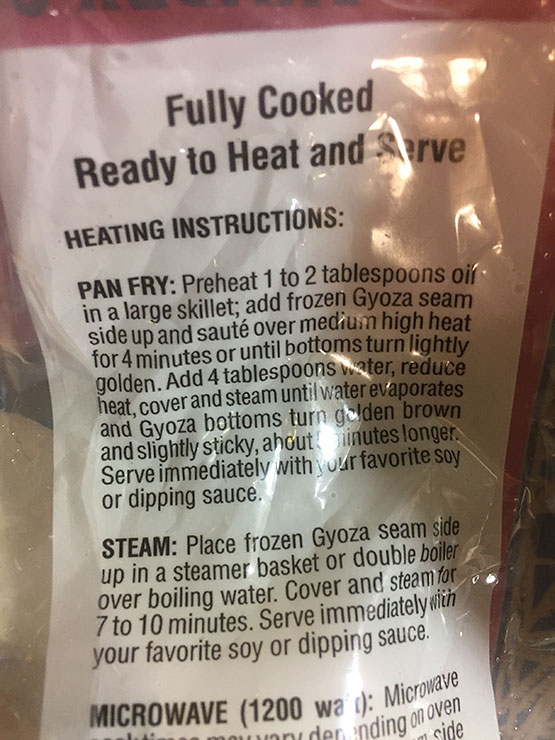
PAN FRYING YOUR DUMPLINGS: One can boil these but personally I make these mostly as Pot Stickers or Gyoza using a well-seasoned black cast iron pan. If you don’t have one of those just use a good non-stick pan. Swirl a tablespoon or 2 of neutral vegetable oil in the pan with medium heat. Put your frozen dumplings in bottoms down, careful they don’t touch each other or they will stick together. You will hear them start to sizzle in a bit. Let them cook without touching them till they are nice golden brown on the bottom, maybe 4-5 minutes…You can check one every once in a while. You don’t want to burn them however you do want very browned bottoms, Well I do! When they are browned, toss about 3-4 tablespoons of water (or stock) into the pan and immediately put a cover on! Stand back of course as they may spit or really steam up at you. Lower the heat a little. If you have a clear glass cover that’s ideal so you can see whats going on inside but if you don’t, any cover that fits tightly will be fine. We want to let them steam until the water is just about all gone which may take about 6-8 minutes. Check when you think they are done. When they are almost ready if you put a tiny bit more oil when the water is all gone and let them keep cooking they can get a quite crispy bottom which is lovely, but this step is tricky, and optional. Anyway this is the reason these dumpling are called “pot stickers” as they do tend to stick to the pan and not want to leave it! If they are a bit stuck use a thin spatula to gently help release them, being careful not to tear the skins.
You should to eat your Gyoza right away while they are nice and hot, so timing is critical. What we do, is we get everything ready, then take just 2 or 3 dumplings at a time on our plates, cover the pan with the heat off to keep them warm and come back to fill up with a few more when we finished the first ones. That way you always eat warm dumplings. In the first picture you can see I served them with edamame and peas which were a great match with these dumplings to add in more veggies. You can serve them with a little rice too and any kind of veggie or salad. We can usually eat about 6 each easily as the Main, along with other stuff though they can be just an appetizer of say 3 or 4 each. I strongly suggest eating lots of green veggies with these. Edamame go great. If you can get Bok Choy or Choi Sum, that would certainly go well. And toss lots of chopped scallions all over these when you serve them.
Many countries have some variation of pot sticker dumplings. In Korea, “Mandoo“. In Japan they are called “Gyoza“. In China, Jiao-zi or Guo-tie.
You always eat dumplings with a dipping sauce. One classic sauce might be Chinese Black Vinegar* with lots of julienned ginger. Or soy sauce plus vinegar, sugar, ginger and garlic. TJ sells a bottle of “GYOZA DIPPING SAUCE” which is fine if making your own sauce is too much trouble. I frequently use TJ’s diping sauce and add just add a few things to it (like Lao Gan Ma, chili sauce) If you like fresh cilantro it’s wonderful with dumplings. Something spicy to add a kick if spicy is your thing, like me. Green Dragon hot sauce for example is great with these! TJ’s Sweet Chili sauce is also lovely! I mean a bit mixed into your dipping sauce.
While I can’t say these TJ frozen dumplings compete with the best Chinese homemade dumpling places I have gone to, these are quite decent and make up a great deal with the convenience of being able to have them anytime you get a craving! These bagged ones are such a bargain for $2.99 a bag (UPDATE: now $3.49). TJ has a number of other “fancier” dumplings in the frozen section in boxes which cost a bit more but frankly I keep coming back to these cheaper bagged versions. I tried TJ’s Pork and Ginger Soup Dumplings and frankly was not impressed. Not surprising as making Xiao Long Bao is a pinnacle of the art of dumpling making. I’ve eaten them at some top dumpling restaurants like Nan Xiang Xiao Long Bao in Flushing, Queens (fantastic! go if you get a chance).
Chinkiang Black Vinegar can be found at most Chinese or Asian groceries (5-6 dollars?) If you can’t find it and don’t mind paying through the nose Amazon sells it. It’s a classic, pantry item.
SIDEBAR: In New York City if you want terrific pan fried or boiled dumplings I check out VANESSA’S DUMPLING HOUSE which I first enjoyed 20 years ago in her original tiny hole in the wall joint on Eldridge Street where no more than 4 people could fit. Her product was fantastic and word grew about her amazing dumplings which went back then for the amazing price of 5 for $1! Vanessa’s business grew and she became a very successful immigrant entrepreneur who kept expanding and improving and now has multiple beautiful places. If you eat her pot stickers or any of her many kinds of dumplings you will learn what really good dumplings taste like. They do cost more though now! Finally, if you really are interested in learning more and maybe trying your own hand to make dumplings you will find lots of great info here
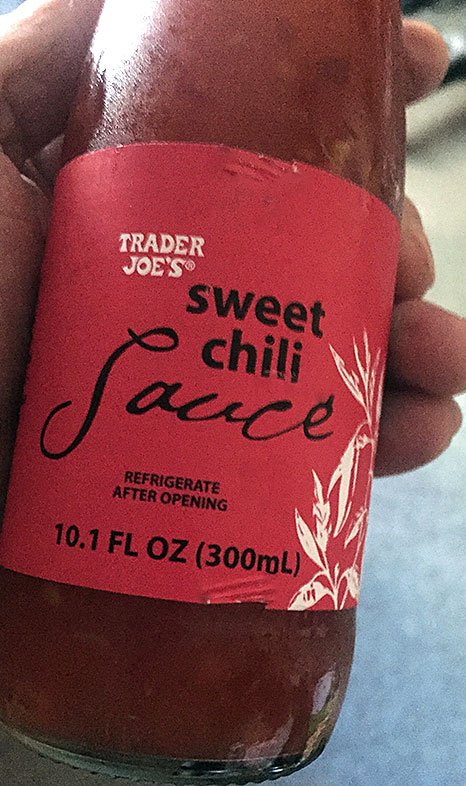
Apparently this is one of Trader Joe’s most popular products, and not without reason. I know it’s one of my favorite TJ products, on my “gotta always have in fridge” list. As the name says, this is a delicious sweet chili sauce that is pretty much the same traditional Asian sweet and spicy chili sauce you will find at any Asian grocery. It’s both sweet and spicy but not crazy spicy, with a perfect balance of the two tastes plus garlic of course. This sauce is typically served with chicken in many Asian cuisines. I had been buying Chinese brands of this stuff for years whenever I went to a special Asian grocery or supermarket but now Trader Joe’s make a version of it so even more convenient, as we put this sauce on many things though its terrific with most any chicken. If you bought a store cooked rotisserie chicken for dinner, serving with this sauce will that roast chicken 10x as tasty. What else can you use it for. Really anything… Chicken sausages? Yes. Fish? Yes (in fact you can put some on top of almost finished broiled salmon and put it back for a minute for a sweet spicy glaze). Grilled pork. Sure! Eggs? Yes. Get it? Seriously I think there is little this would not be good on, except may ice cream.
Easy dipping sauce for dumplings: a 2 tablespoons of this sweet chili sauce, a tablespoon of soy sauce, a little rice vinegar. Fresh grated ginger if you have it. Easy. Some extra garlic wouldn’t hurt either. Now you have a sauce for all those pot sticker dumplings in the freezer. Dinner in 10 minutes.
A bottle used to sell for only $1.29. Last time I checked it went up to $1.49, not bad. I can’t live without this stuff.













 Trader Joe’s Rants & Raves (mostly raves, a few rants)
Recent Comments